Cherry Bark Candy Box
The bark remembers every hand that touches it.
In 1851, the Fujiki family began shaping wild cherry bark into objects in Kakunodate, a town where samurai needed peacetime income. Seven generations later, they're still at it. The bark comes from mountain cherry trees aged 70-80 years, harvested so only a third is taken and the tree keeps growing.
After two years of drying, craftsmen hand-polish each piece until it glows. What makes Denshiro different: it gets better the more you use it. Touch develops the patina. Handling deepens the luster.
We don't earn if you buy · Why this matters
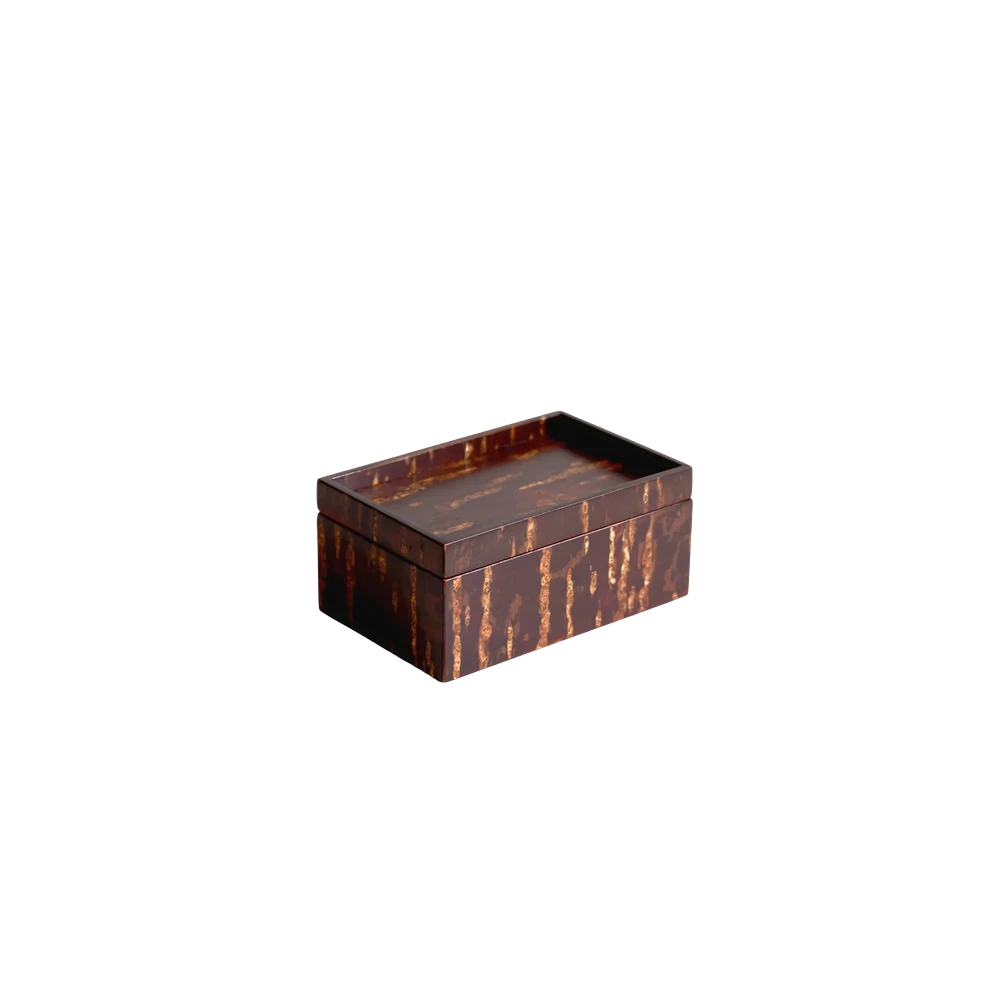
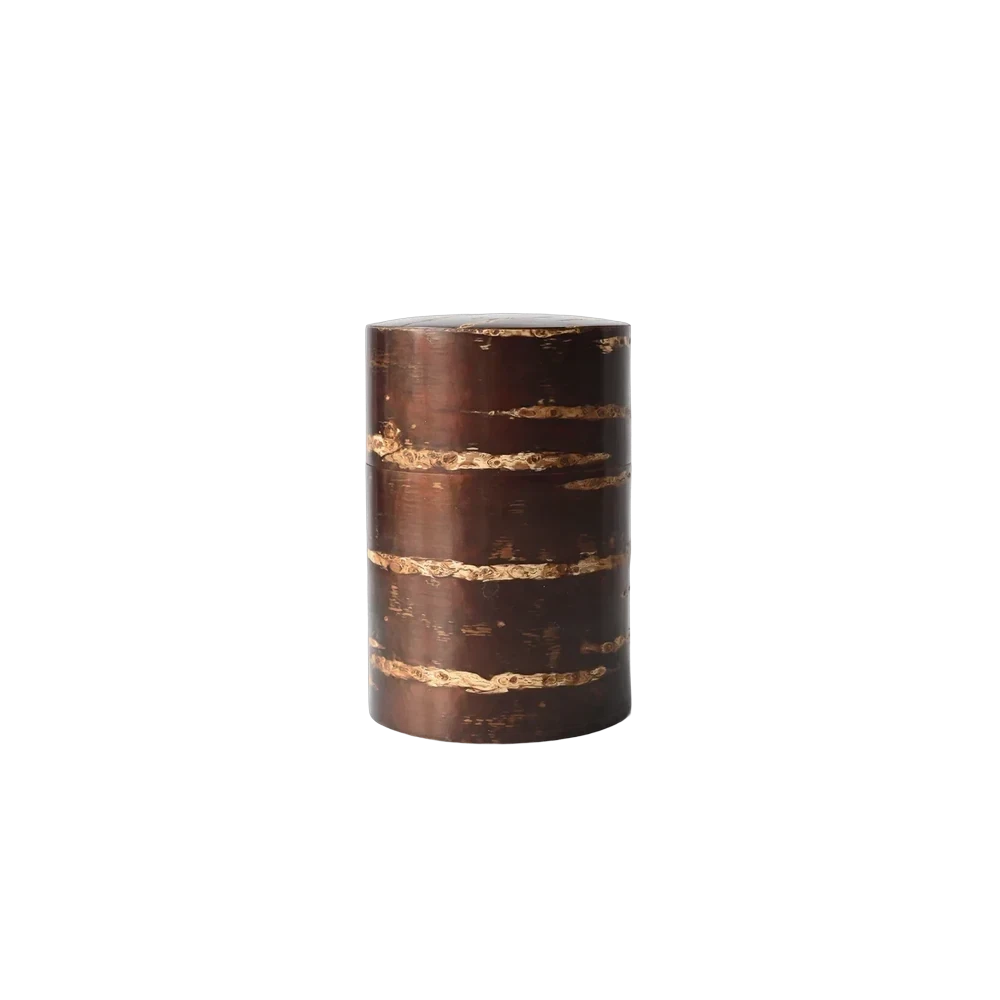
Denshiro Cherry Bark Candy Box ($150). Wild cherry bark storage using kabazaiku, a craft found only in one Japanese town. Seventh-generation makers since 1851.
The argument
Why We Chose the Cherry Bark Candy Box
Cherry bark gets classified into twelve grades based on condition and color. The highest grade, called 'cracked,' shows vertical grain lines with a natural sheen that polishes beautifully over time. Denshiro selects only from the top classifications.
Where industrial production would use synthetic adhesives, traditional kabazaiku makers use nikawa, an animal-based glue that's been standard in Japanese woodcraft for centuries. Small imperfections like knots aren't hidden. Skilled craftsmen transform them into design features. The result is a box where material quality is evident the moment you pick it up.
The fit
Who'll Love This
Someone drawn to Japandi aesthetics and objects from places most people haven't heard of. Kakunodate is called the 'Little Kyoto of Tohoku' for its preserved samurai district. The kind of person who notices when things age beautifully rather than just wear out, and who'd rather display storage than hide it.
Perfect for someone who
- gravitates toward Japandi interiors
- watches how materials change over months of use
- prefers beautiful containers over hidden storage
- collects analog objects in a digital workspace
Skip for someone who
- Prefers low-maintenance items
- Has desk in direct sunlight or very dry climate
- Wants purely functional storage
- Tends to misplace small desk objects
Best artisan desk accessory under $200
Safe GiftUniversal appeal
The Verdict
Our recommendation
Denshiro has made cherry bark objects continuously since 1851. Seven generations of the same family. In 1976, kabazaiku became the first craft from Akita prefecture to receive Traditional Craft designation from the Japanese government.
The surface develops a silk-like luster through handling. As craftsman Kengo Yonezawa puts it: 'Using it is the best way to take care of it.'
What People Say About Denshiro
No direct product reviews. Brand-level sentiment from Japan Objects Store: customers describe Denshiro products as 'a poem' and 'work of art,' praising traditional craftsmanship and aesthetic quality.
The Moment
Reaching for a piece of candy during an afternoon slump. Dropping paperclips back in after finishing a stack of mail. Each touch adds to the patina. Six months in, the surface has developed a sheen that wasn't there at the start.
The Gift Scene
The reddish-brown surface practically asks to be touched. Most people reach for it before unwrapping is even finished. The cherry bark feels warmer than expected, almost silk-like under fingernails.
Then comes the lid. Denshiro craftsmen precision-fit each one so it falls slowly into place rather than dropping. That controlled descent is their signature.
Looking closer, the grain pattern reveals itself. Every piece of bark carries different markings. Two boxes sitting side by side would show completely different surfaces. It sits in the hand with intention, solid enough to feel substantial but not heavy.
Who are you buying for?
The worry
Generic gifts that get tossed in a drawer. Or worse, something too personal that creates awkwardness in future meetings.
Thank You
Samurai side-gig, now on their desk
Corporate gifts feel corporate. Artisan gifts feel presumptuous. This threads the needle with 175 years of legitimacy.
Needed something for a colleague's five-year mark. Gift cards felt dismissive. Branded items felt worse. Found Denshiro while researching Japanese desk objects. The samurai-craftsmen origin matched someone who notices when things are made well. Handed it over at the team lunch. Watched them turn it over twice before asking where Kakunodate was.
Heritage from 1851 signals seriousness. Desk visibility keeps it present. Patina develops with use. Samurai backstory works professionally.
Cherry bark needs only occasional dry cloth care. No water, no products. The 'maintenance' is using it, which polishes the surface naturally. Worry about forgetting it on a shelf is the wrong concern. Worry instead about the colleague who keeps finding excuses to mention it.
Eyes go to the unusual reddish-brown color first. Then a finger traces the surface, registering the silk-like polish. 'What is this material?' leads to the Kakunodate story. Box goes directly on desk, not into a bag.
The worry
Another object that ends up stored out of sight because it's 'too nice to use.'.
Mother's Day
The gift that ages alongside her
Mom resists new things. But this one requires use. The surface polishes through touch. Staying unused would ruin it.
Searched for something that would actually be used, not displayed and forgotten. Denshiro's approach clicked: objects meant to transform through handling. Told her the samurai origins at brunch. She kept circling back to how the bark regenerates after harvest. Now it holds her rings at night.
Patina parallels relationship: grows richer through contact. Seven-generation makers echo family continuity. She'll use it for decades.
Care means wiping with dry cloth occasionally. Direct sunlight and water are the only concerns. She'll intuitively keep it where she keeps nice things anyway. The 'high maintenance' reputation is wrong. Using it IS the maintenance.
She lifts the lid and it descends slowly. That controlled fall is the craftsman's signature. She notices the surface warming in her hand. It goes on the vanity before anything else is unwrapped.
The worry
Showing up with something they could have easily found themselves.
Birthday
From a town most people haven't heard of
Design-forward friends have seen everything trending. This comes from Kakunodate, where samurai needed peacetime income.
Knew the usual sources would yield the usual options. Started searching Japanese regional crafts. Kabazaiku surfaced: only made in one place, only five workshops left, bark from wild trees aged 70-80 years. Presented it with the full backstory. Watched it get photographed from four angles.
Geographic monopoly means they genuinely can't get this elsewhere. Patina will deepen as the friendship continues. Story gives them content to share. Desktop placement means daily visibility.
The 'obscure craft' concern is the point. Your friend values discoveries. This is a genuine one, backed by production since 1851 and government craft designation. The obscurity is earned, not affected.
The unusual surface color registers first. Then the weight in hand, solid but not heavy. The lid closes with that slow precision and eyebrows raise. 'Wait, only five companies make this?' Phone comes out before the wrapping is cleared.
The worry
Bringing something that disappears into the kitchen drawer rotation.
Housewarming
The host gift that becomes a talking point
Wine gets opened, flowers die, candles burn. This develops patina while they explain samurai craftsmen to guests.
Housewarming invite meant finding something beyond the standard options. The Denshiro box solved three problems: unusual enough to notice, useful enough to keep out, storied enough to discuss. Arrived, handed it over, watched it land on the entryway table before dinner started.
Permanent placement beats consumable appreciation. Samurai origin story transfers to them to tell. Patina develops in their space over time. Works for candy, keys, whatever they need.
Practical concerns answered: holds small items, requires only dry cloth care, tolerates normal indoor environments. The real risk is bringing wine again. This eliminates that particular repetition permanently.
The unusual material catches attention immediately. The lid gets tested, and that slow fall into place produces visible surprise. 'This stays in the living room' comes before any question about where it's from.
The worry
'Oh I saw these in Tokyo' or worse, 'I have one already.'.
Birthday
From the one place they haven't sourced yet
They have taste and budget for anything that catches attention. But Kakunodate doesn't show up in usual channels.
The has-everything birthday problem seemed unsolvable. Then: kabazaiku. Made in one town. Five workshops remaining. Technique unknown outside collectors. Presented it expecting skepticism. Got instead the gratifying pause of genuine unfamiliarity followed by detailed questions.
Geographic monopoly defeats self-purchasing. Patina creates uniqueness they can't replicate by buying another. Story provides new knowledge, not just new object. Nobody has-everything from Kakunodate.
The 'too niche' concern inverts for this recipient. Niche is exactly what they lack. Mainstream luxury sits in their closets already. Geographic monopoly and dwindling craftsmen count mean this stays rare without artificial scarcity.
The surface texture is unfamiliar. 'What IS this?' carries genuine curiosity. Explanation of cherry bark technique produces the rare has-everything silence of learning something new.
The bottom line
Built for decades of daily use. The surface grows glossier and deeper in color the more it's handled. Your patina becomes yours alone. The kind of object that gets passed down.
Where it's made
Kakunodate, Akita Prefecture, Japan
Former samurai castle town known for cherry trees. Only place in the world where Kabazaiku is made.
From our research
The 6th generation owner left Seibu department store to return home. Transformed Denshiro from wholesaler to manufacturer. Highest sales ever in 2005. He died in 2015.
Kabazaiku craft originated when samurai needed secondary income during peacetime in the 1780s. The bark is harvested sustainably—only 1/3 removed so trees regenerate.
The score
Cherry bark's natural luster creates warm visual depth. Unique grain patterns make each piece photograph beautifully.
Traditional samurai craft unknown outside Japan. 175-year-old maker creates genuine discovery moment.
Lifting the lid reveals craftsmanship. Tactile cherry bark texture invites touch. Becomes treasured display piece.
175-year heritage, 7th-generation maker, 20+ design-forward retailers worldwide
The evidence
Why we trust this
No direct product reviews. Trust established through Brand Trust Protocol: Fujiki Denshiro Shoten founded 1851 (175-year heritage), 7th-generation family business, Kabazaiku designated traditional craft (1976), carried by 20+ respected retailers including Mitsukoshi, Isetan, Takashimaya, Nalata Nalata, ABASK. Brand-level reviews (2) on Japan Objects Store praise craftsmanship. Cannot verify customer satisfaction for this specific product.
The research behind this
8 verified claims from this product's record - last verified January 14, 2026
Rating and review data from
Quick facts
- Price
- $150
- Feels Like
- $225 Seventh-generation artisan work using bark from 70-80 year old wild cherry trees. Limited production.
- Brand
- Denshiro
- Category
- Desk Accessories
- Aesthetic
- Japandi
- Gift Type
- Safe Gift
- Type
- Keepsake
Value
Seventh-generation craft from bark aged 70-80 years
Common Questions
What makes Denshiro's cherry bark craft special?
Kabazaiku is cherry bark woodworking found only in Kakunodate, Japan. Denshiro has practiced this craft since 1851, now in their seventh generation. The bark comes from wild cherry trees aged 70-80 years. Only five companies worldwide still make it. Japan designated it a Traditional Craft in 1976.
Why does this candy box cost $150?
The price reflects 175 years of craft expertise and materials decades in the making. Cherry bark is classified into twelve grades; Denshiro uses only the highest. Each piece uses traditional nikawa glue, not synthetic adhesives. The surface develops unique patina through use, becoming more valuable over time.
Who is this candy box best for?
Best for colleagues who notice craftsmanship, moms who keep meaningful objects visible, or friends with design taste who've seen everything trending. The samurai-origin story works in professional settings. Sits visibly on a desk and prompts questions from visitors. The patina develops through handling, creating a lasting connection to the giver.
How should I maintain this box?
Wipe occasionally with a dry soft cloth. Avoid water, direct sunlight, and extremely dry environments. The key insight: using it IS the maintenance. The surface polishes naturally through touch, developing a silk-like luster over time. Craftsman Kengo Yonezawa says 'using it is the best way to take care of it.' The patina becomes uniquely yours.
What's the texture like?
Cherry bark feels warmer than expected, almost silk-like. The reddish-brown surface has depth that photographs don't capture. Each piece shows different grain patterns. The lid is precision-fitted to fall slowly into place rather than dropping. That controlled descent is the craftsman's signature.
No more questions? Buy it for $150
How We Validated This
Last updated- Official Denshiro Official Denshiro Story
- Press KOGEI Japan
- Reviews Japan Objects Store
- Retailer Nalata Nalata ABASK Kettl TENZO
- Source Wikipedia Kabazaiku