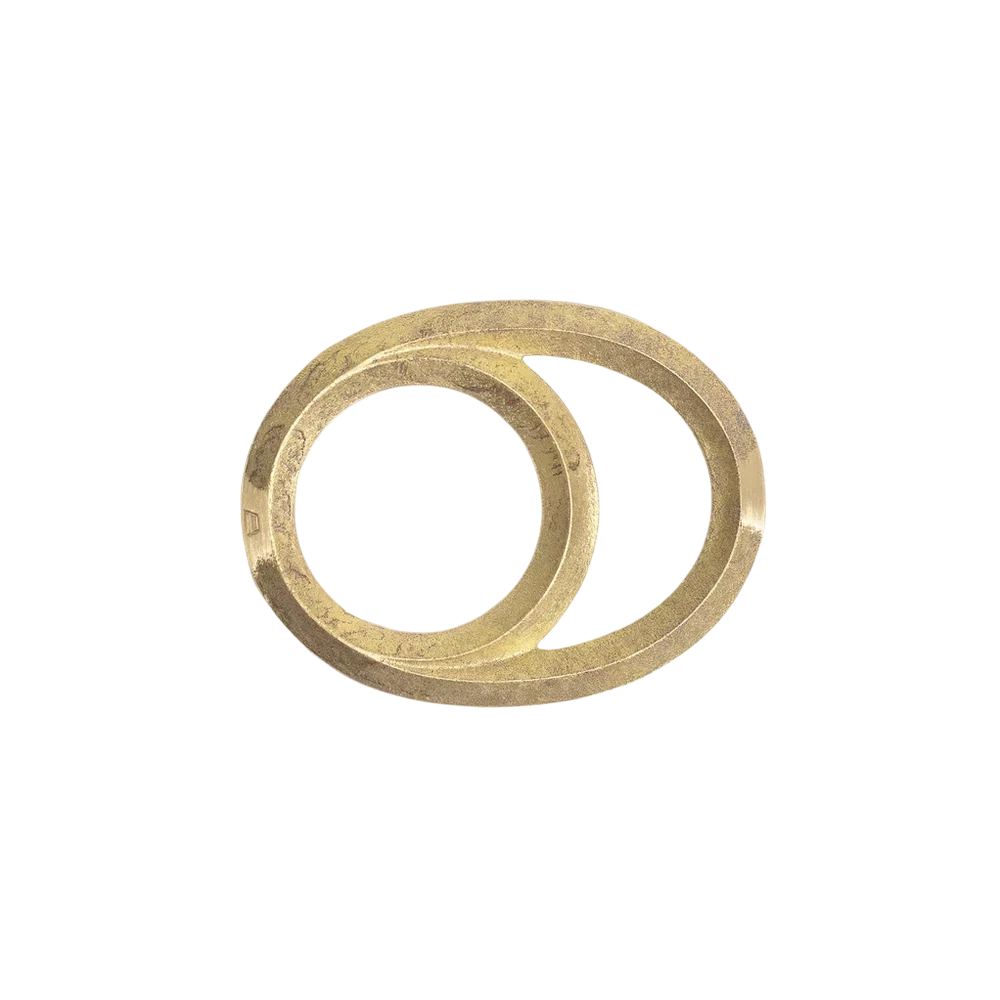
Futagami Brass Tape Dispenser (Small)
A designer walked into a 129-year brass foundry that cast Buddhist altars and proposed they make a tape dispenser.
Futagami has cast brass in Takaoka since 1897, mostly for temples. When designer Oji Masanori visited as a workshop student, he saw the rough sand-cast texture others polish away and asked them to keep it.
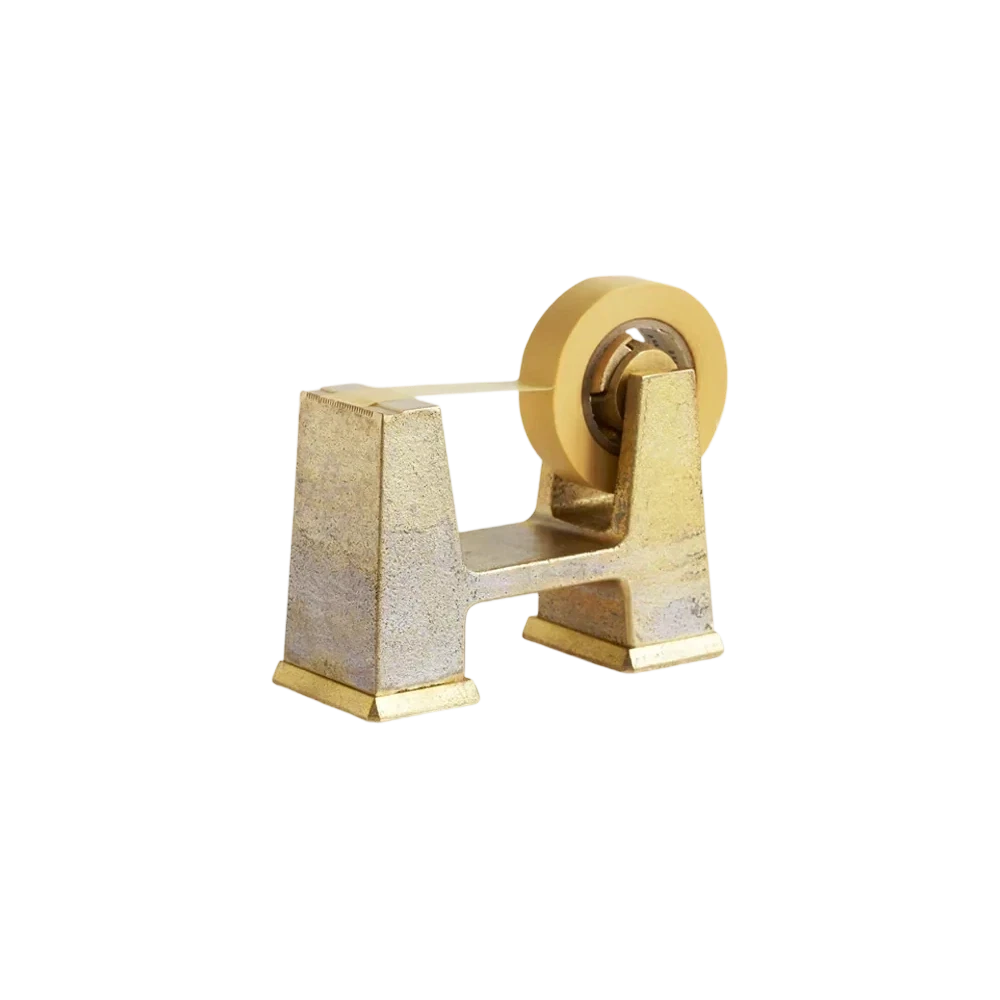
The tape dispenser joined a lifestyle collection that won Interior Lifestyle Tokyo's award in 2009. Every surface is ihada, the raw face of the mold. The brass blade cuts diagonally, not straight down. At 2.55 lbs, one hand pulls tape while the brass holds steady.
We don't earn if you buy · Why this matters
Futagami Brass Tape Dispenser ($285). Sand-cast solid brass with ihada texture from 1897 Takaoka foundry. No precedent in category. Sold by 12+ stockists across 6 countries.
The argument
Why We Chose the Brass Tape Dispenser (Small)
High-end tape dispensers did not exist as a category before Oji Masanori proposed one to Futagami. The competitive landscape is Scotch hedgehog dispensers and generic weighted plastic bases. Nobody else applied 400 years of Takaoka brass-casting tradition to this object.
The ihada finish is a deliberate anti-industrial choice: raw sand-cast surface retained without machining or polishing. Objects of Use describes it as 'a manifestation of their solidity, manufacture, and uniqueness.' Each casting retains texture from its specific sand mold, making every unit physically distinct.
Oji calibrates weight by single grams across all products. Every component is brass: base, pillars, bridge, blade, rotor. No mixed materials.
The fit
Who'll Love This
Design-literate professionals who already shop at Nalata Nalata, Mjolk, or Forsyth. Futagami collectors adding a third brass piece to their desk. Anyone whose workspace is fully considered except for the one plastic tape dispenser they inherited three jobs ago.
Perfect for someone who
- picks up objects in stores to feel their weight
- knows what patina means without looking it up
- has one plastic thing left on an otherwise intentional desk
Skip for someone who
- needs straight-down cuts, brass blade cuts diagonally
- wants polished metal, not raw sand-cast texture
- finds $285 for a tape dispenser excessive, in which case a Futagami brass paperweight delivers the same foundry at $60
- uses tape widths outside 15-18mm or cores outside 25-30mm
Best brass tape dispenser for design-forward workspaces
AdventurousHas a point of view
The Verdict
Oji Masanori studied calligraphy.
Oji Masanori studied calligraphy, then architecture, then founded a design office before attending a brass casting workshop at Futagami. He learned the process and proposed a lifestyle line. That collaboration won the Interior Lifestyle Award in 2009.
Futagami's Matureware hardware took the NYCxDESIGN Best Hardware grand prize in 2016. No customer reviews exist anywhere. Validation comes from 12+ stockists across six countries and design press from Cool Hunting and Remodelista.
What People Say About Futagami
No customer reviews available for this product across any platform searched (Nalata Nalata, Amazon, Forsyth, Mjolk, Zen Minded, ABASK, Mr Kitly, Gestalt Haus). Validation comes from design-world distribution: 12+ stockists across 6 countries, sold out at Forsyth and ABASK, NYCxDESIGN Best Hardware 2016 for the Matureware line, Interior Lifestyle Award 2009. Two other Futagami products on SleekNova maintain trust scores of 7.0 and 6.8.
Recognition
Featured in Cool Hunting and Remodelista
- Made in Japan, Solid Brass, Sand-Cast, Develops Patina
“The Japanese brass foundry has a successful line of timeless home goods created from sand-casted molds.”
“Futagami has been crafting brass goods since 1897. With origins in Buddhist brass tradition, they maintain true to their roots with unwavering attention to quality craftsmanship.”
The Moment
Between emails, one hand reaches for tape while the other stays on the keyboard. The diagonal blade cut is muscle memory now. After three months, the brass where the thumb rests has gone caramel while the base stays gold. A colleague asks about the color change.
The Gift Scene
The box is denser than the size suggests. Inside: solid brass, sand-cast with a rough granular surface that has nothing in common with polished metal. Two pillars rise from the base, connected by a bridging bar that creates a handle underneath. Loading tape reveals the spring-loaded brass rotor.
The first cut fails because the blade is solid brass, not stainless steel. It requires a diagonal approach from the side, pressing down at an angle. Mastering the technique takes three tries and becomes the first conversation about this object.
Rubber feet grip the desk. One hand pulls tape while the brass holds steady at 2.55 lbs. Within a week, the spots where fingers grip daily are already shifting from bright gold toward something warmer.
Who are you buying for?
The worry
Crossing professional lines with something too personal, or being forgettable with another generic desk item.
Thank You
A colleague's desk became the floor landmark after Takaoka brass arrived
Every desk has identical plastic from the supply closet. One just got 2.55 lbs of sand-cast brass.
It sits where the old dispenser sat. The two-pillar brass form reads as architecture. People passing the desk slow down. The diagonal blade technique becomes office lore, each person learning from the last. After two months, the brass at the grip points has shifted color while the base stays gold. The colleague tells the Futagami foundry story without being asked.
Fuchs et al. (2015) found no handmade effect at all for distant recipients, so this one earns its place on other grounds. The ihada sand-cast surface carries visible marks from the foundry's sand molds, each pour unique. That signals recognition, not intimacy: you deserve a 129-year foundry's craft on your desk. The 2.55 lbs holds steady for one-handed tape pulling, making it genuinely functional in any workspace.
$285 is high for a colleague gift but this competes with premium desk objects, not tape dispensers. A Montblanc sits in a drawer. This sits on the desk daily, accumulating patina that proves it belongs. Functional utility provides professional cover.
Brass arrives at the desk. Weight registers immediately. The rough ihada surface gets examined. First tape cut fails against the brass blade. A passing colleague: 'Cut diagonally.' Three people stop by before lunch.
The worry
Spending $285 on a tape dispenser and getting confusion instead of recognition.
Birthday
A $285 brass tape dispenser from a Buddhist foundry, absurd and exactly right
Their workspace is immaculate except for one inherited plastic object they never replaced.
They photograph it before loading tape. The two-pillar form looks like a small monument. Then the spring-loaded rotor, the rubber feet, the blade demanding a specific angle. Three weeks later, a text with a photo: brass shifting from gold toward caramel at the grip. Six months in, visitors pick it up and comment on the weight. The Futagami origin story has become rehearsed.
Fuchs et al. (2015): handmade products hold symbolic love, and the pull toward them is stronger in close relationships. The ihada surface, raw texture retained without polishing, is physical evidence of 129 years of casting practice. Objects of Use calls each casting 'a manifestation of their solidity, manufacture, and uniqueness.' Giving this to a friend communicates something specific: that you know them well enough to understand why a tape dispenser costs $285.
The price-to-category ratio is the point. No one gives a $285 tape dispenser as a hedge. It proves the giver identified a specific gap on a specific desk and filled it with material that will outlast this decade. If the friend gets it, they get it.
Over a kilo of brass where plastic was expected. Ihada texture, nothing like polished metal. Hand slides under the bridging bar. First tape attempt fails. You demonstrate the diagonal cut. Learning the technique together becomes the birthday moment.
The worry
Adding another gift to the returned pile, reinforcing the pattern of failed attempts.
Holiday
For the person who has optimized every category: a gap they did not know existed
Cashmere, rare editions, craft spirits, all tried. Try a tape dispenser from a Buddhist foundry.
Quiet reception at first. Brass gets set on the desk, then picked up again. And again. Over the following week, a research spiral: Futagami's site, the Matureware hardware line, Oji Masanori's philosophy. Two months later, a link arrives: a Futagami trivet with the message 'starting a collection.' The gift did not just fill a gap. It opened a new category of interest.
Category exhaustion is the problem. Every standard gift type has been optimized. This tape dispenser works because it creates a category. The ihada surface, described by Objects of Use as 'raw, unfinished, without machining or polishing,' is the opposite of polished luxury they already own. Wabi-sabi imperfection meets a world of perfection. The maker's symbolic love means value is in accumulated practice, not price.
Hard-to-shop-for recipients are not picky about price. They are picky about novelty. $285 is irrelevant to someone who regularly buys $500 items. What matters is whether they could have found it themselves. A brass tape dispenser from design-world stockists only is territory they have not covered.
No immediate reaction. The brass gets held, read with hands: ihada texture, weight, bridging bar. The blade and rotor examined. Then quietly: 'Where is this from?' The answer is a story they genuinely have not heard before.
The worry
The gift falls below their taste level, or they already own something similar.
Birthday
They own the Eames and the Noguchi. The tape dispenser is still plastic.
Their home office is magazine-ready. Every object intentional. Except behind the monitor.
The plastic dispenser is replaced within the hour. Brass slots into the workspace as if it was always there, proportions from a designer trained in architecture. Patina shows within weeks at grip points. Six months later, the aged brass sits next to a fresh Futagami paperweight. One oxidized, one bright. The collection became deliberate the day the tape dispenser arrived.
Fuchs et al. (2015) found handmade products are seen to hold the maker's love, symbolically. The has-everything person has received luxury gifts, but few carry visible maker's love. Ihada sand-cast texture shows the foundry's process: sand-grain impressions, color variations from each pour, marks that polished luxury erases. Our test is not price but legibility: can you see the human hand? In ihada brass, yes.
Duplication risk is zero. Nobody gives sand-cast brass tape dispensers. Return risk is equally low. The real risk is giving something beneath their taste level. Futagami, with NYCxDESIGN awards and 12+ stockists across six countries, does not carry that risk.
A pause. Not expecting surprise. The weight signals something. Rough ihada where smooth polish was expected. Two-pillar form, brass blade, rotor examined. 'A tape dispenser?' From a 129-year altar foundry. Recognition, not politeness.
The bottom line
Futagami has been casting brass since 1897. Oji Masanori designs objects that outlast him. At five years the brass is caramel. At thirty, russet brown. The tape dispenser records decades of one person's hands in oxidized metal.
Where it's made
From our research
Oji Masanori is entirely self-taught in product design. He studied architecture, worked in graphic design, then proposed a brass lifestyle line to a foundry he visited as a workshop student.
Oji Masanori co-founded a gallery called Kumu in Tokyo's Bakurocho district. The name means 'to connect.' He designed the logo, mailbox, and fixtures. Futagami brass is displayed on the ground floor alongside Jicon porcelain.
The score
Architectural brass sculpture with ihada sand-cast texture. Two-pillar form with bridging bar. Patina shifts gold to caramel to russet across decades.
129-year Buddhist altar foundry applied to desk tape. Tape dispensers at this level barely exist as a category. Design-world stockists only.
2.55 lbs of solid brass where plastic was expected. Ihada texture under fingertips. Brass blade and rotor discovered through use. Patina begins.
Founded 1897. NYCxDESIGN Best Hardware 2016. 12+ stockists across 6 countries.
WOW scored 9 because brass tape dispensers at this level had no category precedent. Discovery factor exceeds the paperweight and opener, which compete in established desk-object territory.
The evidence
Why we trust this
No customer reviews found across any platform (Nalata Nalata, Amazon, Forsyth, Mjolk, Zen Minded, ABASK, Mr Kitly, Gestalt Haus). Brand Trust Protocol applied: 129-year Takaoka foundry (est. 1897), 4th-generation owner Toshihiro Futagami. NYCxDESIGN Best Hardware 2016. Interior Lifestyle Award 2009. 12+ retailers across 6 countries. Sold out at Forsyth and ABASK validates demand. Two other Futagami products live on SleekNova.
The research behind this
8 verified claims from this product's record - last verified May 6, 2026
Rating and review data from
- Nalata Nalata Primary
- Cool Hunting
- Remodelista
- Forsyth
- Mjolk
Quick facts
- Price
- $285
- Feels Like
- $400 Solid brass from a 129-year foundry. Sand-cast by hand. Every component brass, including blade.
- Brand
- Futagami
- Category
- Desk Accessories
- Aesthetic
- Japandi
- Gift Type
- Adventurous
- Type
- Keepsake
Value
Sand-cast in solid brass in Takaoka since 1897.
Common Questions
How is the Futagami tape dispenser made?
Sand-cast by hand at a Takaoka foundry established in 1897. Molten brass poured into sand molds produces the ihada surface texture, retained without machining or polishing. Copper from Toyama Prefecture. Designer Oji Masanori proposed the lifestyle line after attending a Futagami casting workshop. Blade, rotor, and base are all solid brass.
What justifies the price of a brass tape dispenser?
Solid brass from a 129-year foundry, sand-cast with ihada texture, every component brass including blade and rotor. 2.55 lbs keeps it stable for one-handed use. Patina develops: camel at 5 years, russet at 30. No tape dispensers at this level existed before this. The price reflects foundry heritage and material permanence, not technology.
Who is the Futagami tape dispenser a good gift for?
Colleagues, friends, and hard-to-shop-for recipients who notice materials and form. The functional category keeps it professionally safe. The origin (129-year Buddhist altar foundry) signals taste. Works for birthdays, promotions, and thank-you moments. $285 sits in the desk-object range alongside designer pens.
What tape size works with the Futagami small dispenser?
Standard scotch tape with 15-18mm width and 25-30mm inner diameter. Masking tape of the same dimensions also works. The spring-loaded brass rotor is detachable for loading. The brass blade requires diagonal cutting, pushing tape from the side at an angle. Straight-down cuts will not work cleanly. Retailers include this instruction.
How does the Futagami brass patina develop?
Unlacquered brass oxidizes from contact with skin oils and air. Futagami specifies camel patina within 5 years and russet brown approaching 30. The ihada sand-cast surface holds oils differently than polished brass, creating unique patterns. A soft polishing cloth restores original luster if desired. Each piece develops its own patina map.
No more questions? Buy it for $285
How We Validated This
Last updated- Press Cool Hunting Remodelista Rikumo Journal
- Retailer Nalata Nalata Forsyth Mjolk Zen Minded ABASK Mr Kitly Gestalt Haus