Your Brain Knows a Good Gift When It Sees One
Forty participants. Sixty-four electrodes each. Sixty products flashing on screens.
Researchers at Nanjing Forestry University and Ningbo University wanted to know what happens in the brain – not what people say happens, but what actually happens – when it encounters good design versus mediocre design.
So they wired people up and watched.
The answer arrived in 100 milliseconds. One-tenth of a second. Faster than a blink.
Before conscious thought begins, the brain has already decided whether something looks valuable or cheap, special or ordinary, worth attention or not.
This isn’t metaphor. It’s measurable electrical activity. And it changes how we should think about choosing gifts.
The Experiment: Red Dot Winners vs. the Competition
The researchers assembled 60 products: 30 Red Dot Design Award winners and 30 ordinary products from Amazon. All were electronic tools, controlled for similar functionality. All were shown at the same price (roughly $46 USD). All were converted to black-and-white images to isolate the design variable.
Then 40 participants viewed these products while wearing 64-electrode EEG caps.
The results were unambiguous. When asked whether they’d buy each product:
Participants showed 87.6% ± 13.4% purchase intent for high design aesthetics versus 67.3% ± 10.5% for low design aesthetics (t = 7.58, p < 0.001).
Same price. Same functionality. Same black-and-white presentation. The only difference was design quality.
And the well-designed products won by 20 percentage points.
But the behavioral data only tells part of the story. The real revelation came from what was happening inside participants’ brains.
Three Signals in 400 Milliseconds
The researchers tracked three distinct neural components as participants viewed each product. Together, they reveal a cascade of judgment that happens before you’ve had time to think.
The N100 Response (~100ms): Attention Allocation
Within 100 milliseconds – one-tenth of a second – the brain produces a signal called N100 that reflects early attention allocation. This finding aligns with earlier research showing visual appeal is assessed within 50 milliseconds – the brain renders judgment before conscious thought begins.
Here’s what the EEG revealed:
“The average N100 amplitude for the low-design-aesthetic products (mean ± SD = −1.396 ± 0.625) was more negative than that for the products that won the Red Dot Award (mean ± SD = −0.778 ± 0.612).”
Translation: ordinary-looking products required more cognitive effort to process. The brain had to work harder to make sense of them. Beautiful design, by contrast, flows through visual processing more efficiently.
This happens before you’ve consciously registered what you’re looking at.
The Lab · Deep Dive DD-2026-014
400ms: Three Neural Verdicts
Before You Think
EEG research reveals the brain renders judgment on design quality in three stages, all before conscious thought begins.
N100: Attention
Beautiful design flows through visual processing effortlessly. Ordinary design requires more cognitive effort. The brain decides what deserves attention.
P200: Emotion
High-design products trigger positive emotional arousal. Measured at the parietal lobe.
N400: Value
The brain checks if price matches perceived value. Well-designed products at any price register no conflict. Ordinary products trigger mismatch.
Purchase intent at identical prices ($46 USD). Same functionality. Design was the only variable.
400ms: Three Neural Verdicts Before You Think
Shi et al. (2021) used 64-electrode EEG caps on 40 participants viewing Red Dot Award winners versus ordinary products at identical prices. Three neural signals emerged in sequence: N100 (100ms) for attention allocation, P200 (240ms) for emotional arousal, and N400 (380ms) for value perception. High-design products won 87.6% purchase intent versus 67.3% for low-design, a 20-point gap driven entirely by design quality.
Products That Win Each Neural Stage
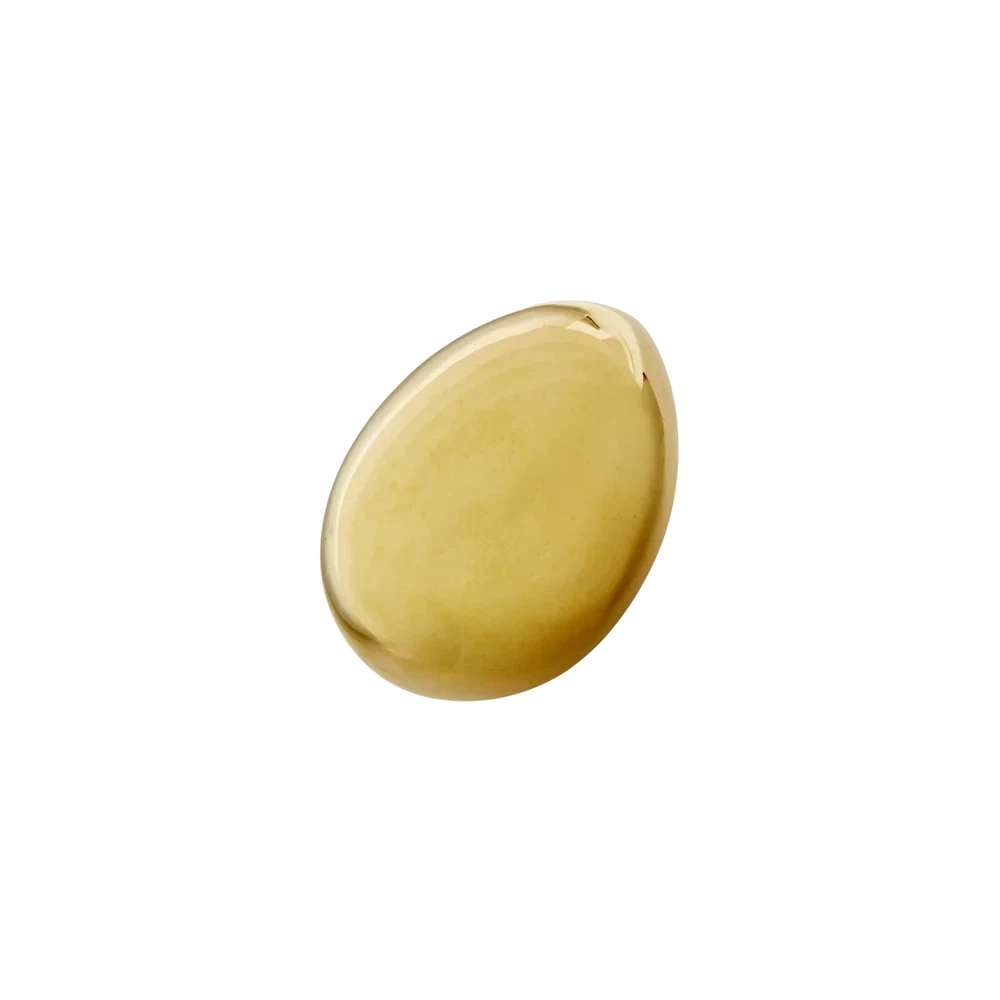
- Carl Auboeck Brass Egg 8.3 · $245 · N100 stage
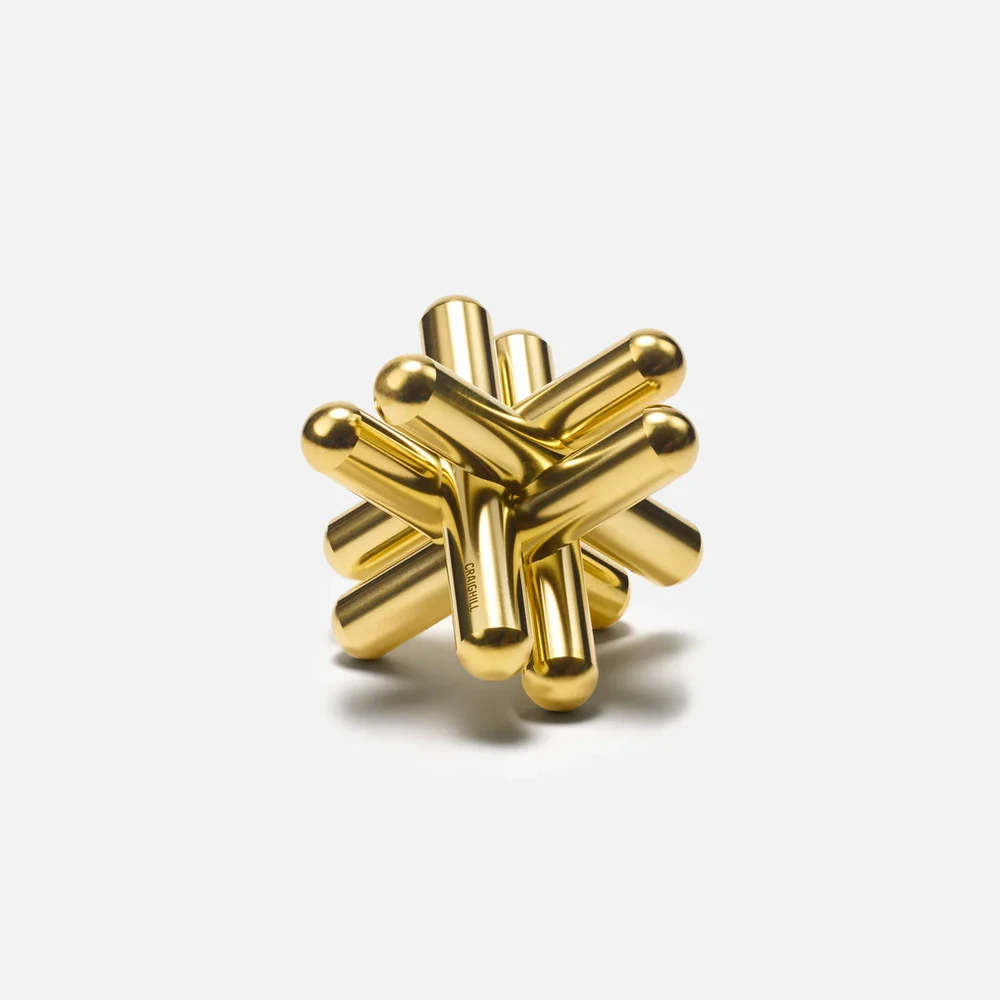
- Craighill Jack Puzzle 8.8 · $98 · N100 stage
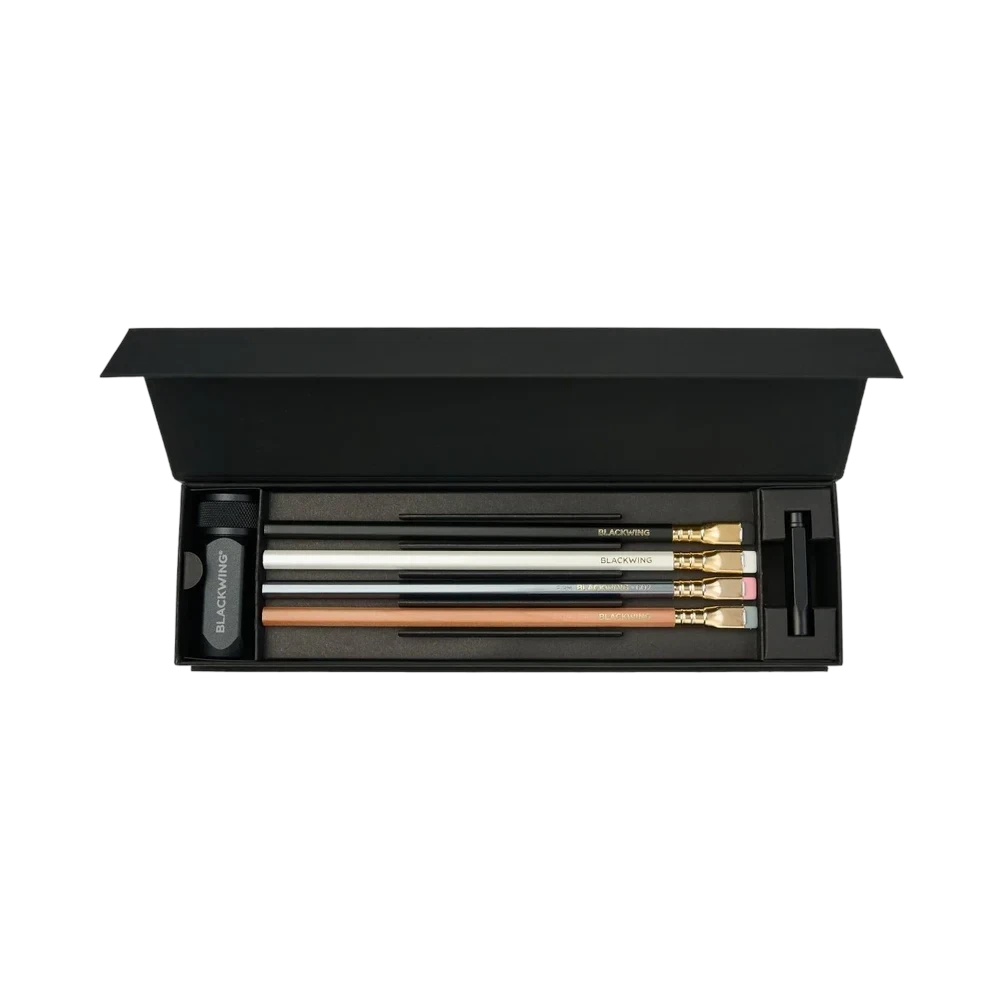
- Blackwing Essentials Set 8.5 · $50 · P200 stage
- Fredericks & Mae Confetti Cutting Board 8.9 · $95 · N400 stage
SleekNova weights WOW at 35% because the brain's first 100 milliseconds determine everything that follows.
Source: Shi, A. Q., Huo, F. R., & Hou, G. H. (2021). "Effects of Design Aesthetics on the Perceived Value of a Product." Frontiers in Psychology, 12, 670800.
View on Frontiers →
The P200 Response (~240ms): Emotional Verdict
By 240 milliseconds, the brain produces P200 – a signal associated with emotional arousal. Here’s what the researchers found:
“The P200 amplitude elicited for the high-design-aesthetic products was significantly smaller than that elicited for the low-design-aesthetic products at the parietal lobe.”
What does this mean? Beautiful design triggers positive emotional processing. The brain is literally having a different emotional experience based on design quality alone – and that difference is measurable within a quarter second.
fMRI research has shown that aesthetic packaging activates the same reward circuits as anticipated gains – the vmPFC, nucleus accumbens, and cingulate cortex all light up.
The N400 Response (~380ms): Value Calculation
By 380 milliseconds, the brain produces N400 – a signal that emerges when there’s a mismatch between expectation and reality. Typically studied in language (when a sentence ends with an unexpected word), N400 also appears when price doesn’t match perceived value.
“The average N400 amplitude elicited for the low-design-aesthetic products was more negative than that elicited for the high-design-aesthetic products.”
When participants saw an ordinary-looking product with a $46 price tag, their brains registered conflict: This doesn’t look like it should cost that much.
When they saw a Red Dot winner at the same price, no conflict occurred. The design had already communicated value.
The researchers summarize:
“This study presents ERP results for the cognitive processing of aesthetics and explains why high design aesthetics improve product value from a neural science perspective.”
What This Means for Gift Selection
Our reading of this research: the story you want to tell about a gift – the craftsmanship, the meaning, the reason you chose it – can only land if the first visual impression passes the 100ms test.
Your brain doesn’t wait for explanation. It renders judgment before explanation is possible.
This doesn’t mean gifts need to be expensive. The Red Dot winners in this study weren’t priced higher than the ordinary products. They were shown at identical prices. What they had was design excellence – proportions, materials, finish, and form that the brain immediately recognizes as valuable.
The researchers studied electronic tools, not gifts specifically. But the neural mechanisms they identified – attention allocation, emotional arousal, value perception – apply to everything we see.
Including the moment someone unwraps what you’ve given them.
How This Connects to Our Methodology
At SleekNova, we score gifts across four dimensions: WOW (discovery factor), GLOW (craftsmanship), MOMENT (emotional impact), and TRUST (verification). WOW is weighted highest at 35%.
The N100 response is the brain’s instant assessment of design quality. In the study, high-aesthetic products triggered stronger neural responses and received higher value ratings.
When we evaluate a product, the Shi et al. study suggests a question worth asking: Does this design trigger positive neural responses before conscious thought begins?
The story matters. The craftsmanship matters. The meaning matters. But all of it builds on the foundation of that first 100 milliseconds.
If the gift doesn’t pass the visual test, everything else starts from behind.
Four Products That Pass the 100ms Test
Design excellence creates instant perceived value. These products embody, in our reading, what the research found.
Craighill Jack Puzzle
$98 | Score: 8.8 | WOW: 9.0
Six notched brass bars interlock in one specific way to create a unified “jack” shape. It weighs just over one pound.
The N100 response is about efficiency – how easily the brain processes what it sees. The Jack Puzzle’s form is so clean, so precisely milled, that visual processing is effortless. No decoration competing for attention. No unnecessary complexity. Just six notched bars of solid cartridge brass.
Hunter Craighill founded Craighill in 2015 with a simple premise: everyday objects deserve serious design attention. The Jack Puzzle epitomizes this philosophy. It’s a desk object, a paperweight, a brain teaser – but mostly it’s a piece of engineering that the brain instantly recognizes as valuable.
The For Life Guarantee backs it up: “If it breaks, we’ll fix it. If it fails, we’ll replace it.”
The Jack Puzzle passes the N400 test because its visual signals (precision metalwork, satisfying proportions, substantial weight) align with what the brain expects from something meaningful. No mismatch. No conflict.
Just immediate value recognition.
Blackwing Essentials Set
$50 | Score: 8.45 | WOW: 9.0
Four pencils, one sharpener, one point guard. All in a box designed to announce: this is not ordinary stationery.
The original Blackwing 602 was first manufactured in 1934. After the pencil became unavailable, individual pencils regularly commanded $40 or more on auction sites. California Cedar Products revived the brand under Palomino in 2011.
The Essentials Set includes all four Blackwing graphite formulations – Matte (soft), 602 (firm), Pearl (balanced), and Natural (extra-firm) – along with a One-Step Long Point Sharpener that creates a curved point resisting breakage.
The Getty Museum stocks it. The Morgan Library stocks it.
This is pencil design at its apex.
The Shi et al. study used Red Dot Award winners to represent design excellence. Blackwing represents something even rarer: design that earned its status through 90 years of use. The brain recognizes heritage in the silhouette before anyone explains the history.
Carl Auböck Brass Egg
$245 | Score: 8.3 | WOW: 10.0
A solid brass egg.
That’s it.
Designed by Carl Auböck II in 1952, it’s still produced today in the family atelier in Vienna by Carl Auböck IV. Same workshop. Same original molds. Same sand casting technique. Each egg is sand-cast and polished in the workshop.
Walter Gropius – founder of the Bauhaus – kept one on his desk. Carl Auböck II received four gold medals at the Triennale di Milano. The family has run the workshop across four generations, turning ordinary objects into sculptural things of beauty.
Pure form triggers the most efficient N100 response. No competing elements. No visual noise. Just a shape so refined that the brain processes it instantly as valuable.
The Auböck Egg is design distilled to essence.
Fredericks & Mae Confetti Cutting Board
$95 | Score: 8.9 | WOW: 9.0
A terrazzo-style cutting board made from recycled plastic production scraps.
Here’s what makes this design brilliant: the confetti pattern isn’t decorative. It’s structural. The multicolored flecks are recycled plastic production scraps, made into a dishwasher-safe HDPE board.
The MoMA Design Store carries it. The powder-coated metal handle makes it servable. The material makes it indestructible.
The N400 response detects mismatch between expectation and reality. A cutting board should look utilitarian. This one looks like art.
The brain expects one category and gets another – but the mismatch resolves positively because the elevated design is backed by genuine functionality.
What the Research Does and Doesn’t Prove
This research has limits worth acknowledging.
The study tested a single price point ($46 USD). We don’t know how design effects scale across different price ranges. The products were electronic tools, not gifts. The stimuli were black-and-white images, removing color from the equation. And participants were in a lab, not making real purchase decisions with real money.
The researchers chose these constraints deliberately to isolate the design variable. Real gift-giving involves brand signals, context, color, price comparisons, and relationship dynamics that this study doesn’t address.
What the study does prove: at a neural level, design quality affects perceived value. The brain processes aesthetics faster than conscious thought. And those instant judgments drive behavioral intent.
For gift selection, the implication is clear. You can explain a gift’s story. You can describe its craftsmanship. You can reveal the meaning behind your choice.
But all of that happens after the brain has already rendered its 100-millisecond verdict.
The gifts that win are the ones that win immediately.
Explore More High-WOW Gifts
Every product we curate is scored across four dimensions: WOW, GLOW, MOMENT, and TRUST. Learn how our methodology works.
Study: Shi, A. Q., Huo, F. R., & Hou, G. H. (2021). “Effects of Design Aesthetics on the Perceived Value of a Product.” Frontiers in Psychology, 12, 670800.
Products in This Research
The gifts that embody this study's findings