MoMA, 1995. A Designer Before His Studio Existed.
MoMA showed his aluminum work two years before this cast iron studio existed, so the pedigree belongs to the designer and not to the trivet.
Did not pass
MoMA, 1995. The Museum of Modern Art opens “Mutant Materials in Contemporary Design.” Among the 200 objects selected by curator Paola Antonelli: a collection of sand-cast aluminum tableware by Hisanori Masuda, a Japanese designer working in Yamagata Prefecture.
Two years later, Masuda founded Chushin Kobo. A studio dedicated to cast iron.
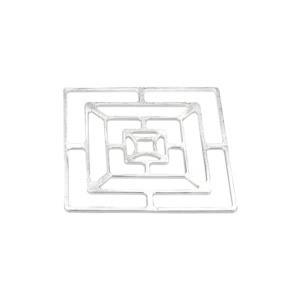
We found his Mitsunami trivet at Gessato for $35. Four waves of lacquered iron, cast using techniques that date back 950 years. The kind of product that makes you pause. We ran it through our system.
Final score: 7.7. Our threshold is 8.0.
The Math
GLOW scored 8. The wave pattern is sculptural, not decorative. Matte black lacquer photographs without glare. The form reads clearly at any scale. This is better than most kitchen accessories.
WOW scored 8. Yamagata casting, we suspect, is new to most American hosts. They know Nambu tekki from Iwate, maybe. But the Yamagata tradition, recognized as a Traditional Japanese Craft in 1974, is in our view a collector’s knowledge. When a guest asks about the trivet under the hot pot, there is a story to tell. A 950-year story.
MOMENT scored 7. The trivet serves a clear purpose: protect the table, elevate the pot. It works at dinner parties, housewarming gifts, host offerings. But the moment is quiet. The iron has weight, yes. The lacquer catches light.
Still, the reaction is appreciation more than surprise. A gift for someone who already understands craft, not someone you are introducing to it.
TRUST scored 7.5. Four consecutive Good Design Awards, 2012 through 2015. Japan Craft Design Association membership. Masuda teaches at Tohoku University of Art and Design and Yamagata University. Gessato, the retailer, holds a BBB A+ rating and a Trustpilot score of 4.6 with 45 reviews. But we found no product-specific reviews for the trivet itself.
This is common for specialty craft items. We applied our Brand Trust Protocol, weighting institutional credentials. The protocol worked. The score is fair.
Weighted total: (8 × 0.25) + (8 × 0.35) + (7 × 0.25) + (7.5 × 0.15) = 7.675, rounded to 7.7.
The Designer’s Timeline
The MoMA exhibition is real. We verified it on MoMA’s own website. Masuda’s “Iquom” tableware collection appears in the Metals section alongside titanium wheelchairs and recycled aluminum vases. The curatorial note describes him as “exposed to the rich, centuries-old tradition of the metal crafts in Yamagata Prefecture.”
The V&A exhibition is also real. “Japanese Studio Crafts” ran in London the same year. Masuda’s official biography lists both shows.
But here is the distinction that matters: those exhibitions featured his aluminum work, made for a company called Kikuchi Hojudo. Chushin Kobo, the cast iron studio, did not exist until 1997. The trivet we evaluated was not the trivet shown at MoMA. The designer was shown at MoMA. The technique is different. The material is different. The studio came later.
This is not a disqualification. It is a clarification. Masuda’s credentials are genuine. The MoMA pedigree belongs to him, not to this specific product.
Why 7.7 Falls Short
The MOMENT score held us back. A trivet is a functional object. Beautiful, yes. Meaningful to someone who values Japanese craft, yes. But the gift scene is limited.
You cannot give a trivet to someone without a kitchen they use. You cannot give it to someone who does not cook with pots heavy enough to need protection. The audience is specific.
Compare this to a candle, which anyone can burn. Or a mug, which anyone can hold. The trivet requires context. Our system penalizes that specificity, not because the product is flawed, but because our methodology measures gift universality.
What Would Change Our Mind
Nothing about this product will change. The scores reflect real constraints. The MOMENT ceiling is structural.
If you came here looking for a Japanese craft trivet, the research supports this one. Masuda’s credentials are exceptional. The Yamagata tradition is documented. The price, $35, makes museum-pedigree craft accessible.
We simply cannot feature products below 8.0. A Japanese craft trivet that did clear our bar is Kamasada’s Nambu iron trivet, cast in a family workshop in Morioka and finished in urushi lacquer.
This trivet is almost certainly excellent. The designer’s museum exhibitions are verified. The Good Design Awards are verified. The Yamagata tradition is nearly a millennium old. Our methodology measures something specific: gift-giving potential at scale. A trivet for $35 with a 950-year backstory is a remarkable object. It is not, by our math, an 8.0 gift.