84 Milliseconds. Your Brain Already Decided. Curves Won.
Eighty-four milliseconds. That’s how long your brain needs to decide whether it likes what it sees. Not seconds. Milliseconds. Faster than a blink. Faster than you can read this sentence.
In that sliver of time, before conscious thought kicks in, your visual system has already cast its vote.
And it votes for curves.
Moshe Bar and Maital Neta proved this in a 2006 study that should change how you think about gift-giving. They showed participants pairs of objects, identical except for one feature: some had curved contours, others had sharp angles. Exposure time? 84 milliseconds. The instruction? React with your gut.
The results were decisive. Curved objects were liked 67.2% of the time. Sharp-angled versions? Just 50.6%. That gap, a statistical effect size of d = 0.94, represents one of the largest preference effects in visual psychology.
The Threat Detection System You Didn’t Know You Had
Why would contour shape matter so much? Bar and Neta traced it to something ancient: your brain’s threat detection circuitry.
“Sharp primitive elements (e.g., a V-shaped corner) convey threat, whereas round primitives convey ‘warmth.'”
Bar & Neta, Psychological Science (2006)
Sharp angles in nature tend to signal danger. Thorns. Teeth. Claws. Your visual system evolved to notice them instantly, triggering a low-level wariness before you consciously register what you’re looking at.
Curves signal the opposite: river stones, fruit, the human face. Safety. Approachability.
The remarkable part? Participants had no idea this was happening. They knew whether they liked something. They couldn’t explain why. As the researchers noted: “although people are aware of the perceptual features of a stimulus, they are not necessarily aware of how those features influence their impressions.”
What This Means for the Gifts You Give
At SleekNova, we weight WOW at 35% of our score because first impressions determine everything that follows. Bar and Neta’s work explains the mechanism.
When someone unwraps a gift, their brain processes its visual form in under a tenth of a second. That processing happens below consciousness. And curved contours trigger warmth before a single thought forms.
This doesn’t mean angular gifts are bad. It means curved gifts start with an advantage. The brain has already decided it feels safe before the recipient even picks it up.
The Companion Finding: 50 Milliseconds to Judge
Bar and Neta’s research pairs with another 2006 study that gift-givers should know. Lindgaard et al. found that aesthetic judgments form in just 50 milliseconds, and those snap judgments persist throughout evaluation.
The two studies answer different parts of the same question: Lindgaard proves how fast the brain decides (before conscious thought begins), while Bar and Neta prove what wins in that window (curved contours that signal warmth rather than threat).
Together, the research creates a complete picture. You have less than a tenth of a second. In that time, the brain scans for threat signals. Sharp angles trigger wariness. Curves trigger approach.
The gift that wins the first glimpse gets the benefit of the doubt on everything that follows.
Bar & Neta (2006) · Psychological Science
Your Brain Picks Curves in 84 Milliseconds
Participants saw objects for 84ms. One feature determined preference: contour shape. Here's what won.
Curved Objects
Warmth · Safety · Approach
0%
preferred by participants
Sharp-Angled Objects
Threat · Wariness · Caution
0%
preferred by participants
Cohen's d
0.94
One of the largest preference effects in visual psychology. 84ms exposure, 140+ item pairs.
Gifts That Win the Curve Advantage
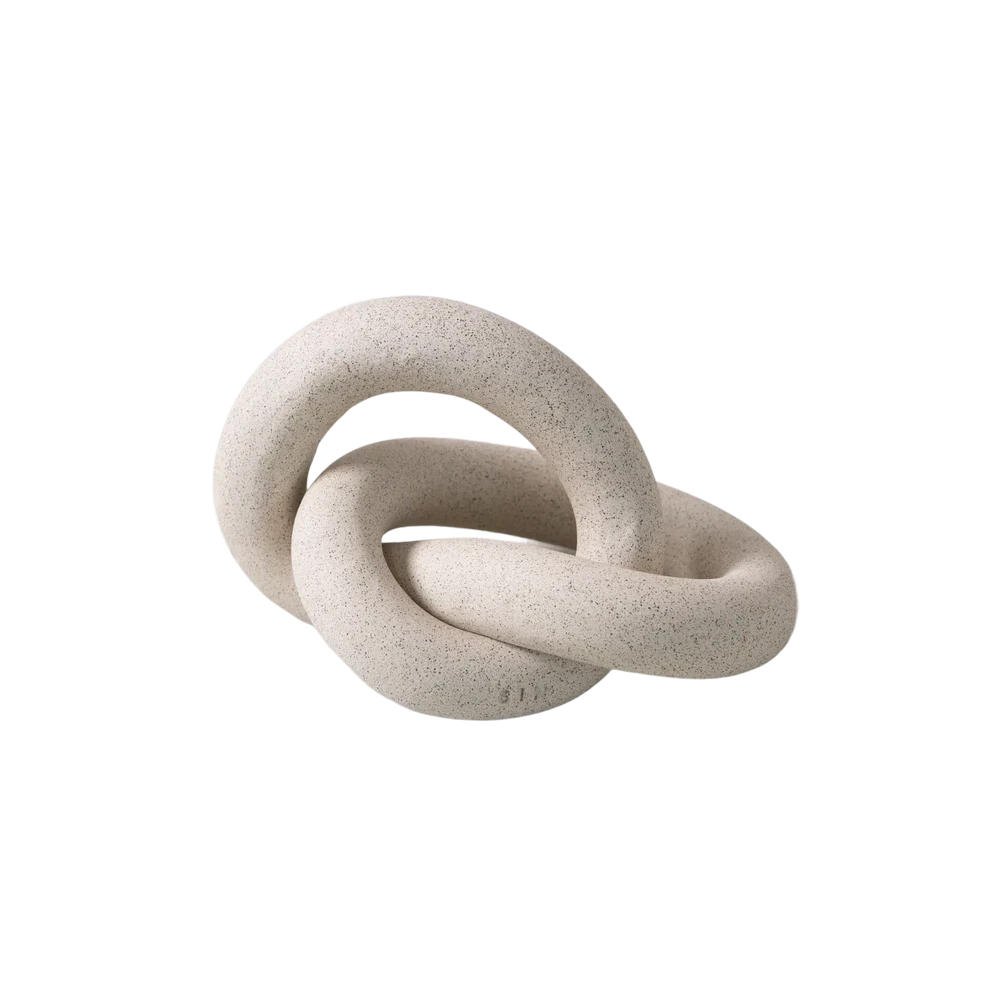
SIN Infinity Knot
Continuous curve with no beginning or end. Two loops intertwined, zero sharp angles. The infinity symbol in speckled stoneware.
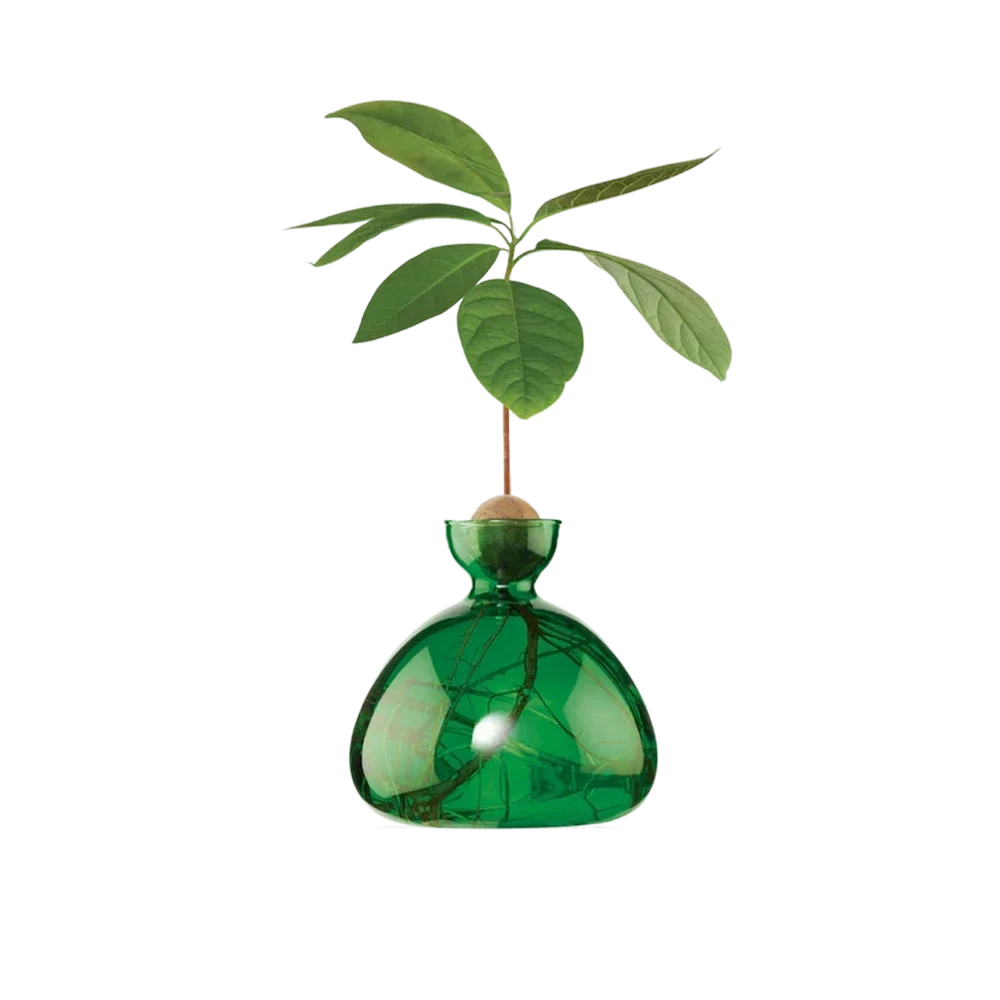
Ilex Studio Avocado Vase
Borrows fruit's evolutionary shorthand. Spherical chamber, organic swell, complete absence of edges. MoMA-stocked.
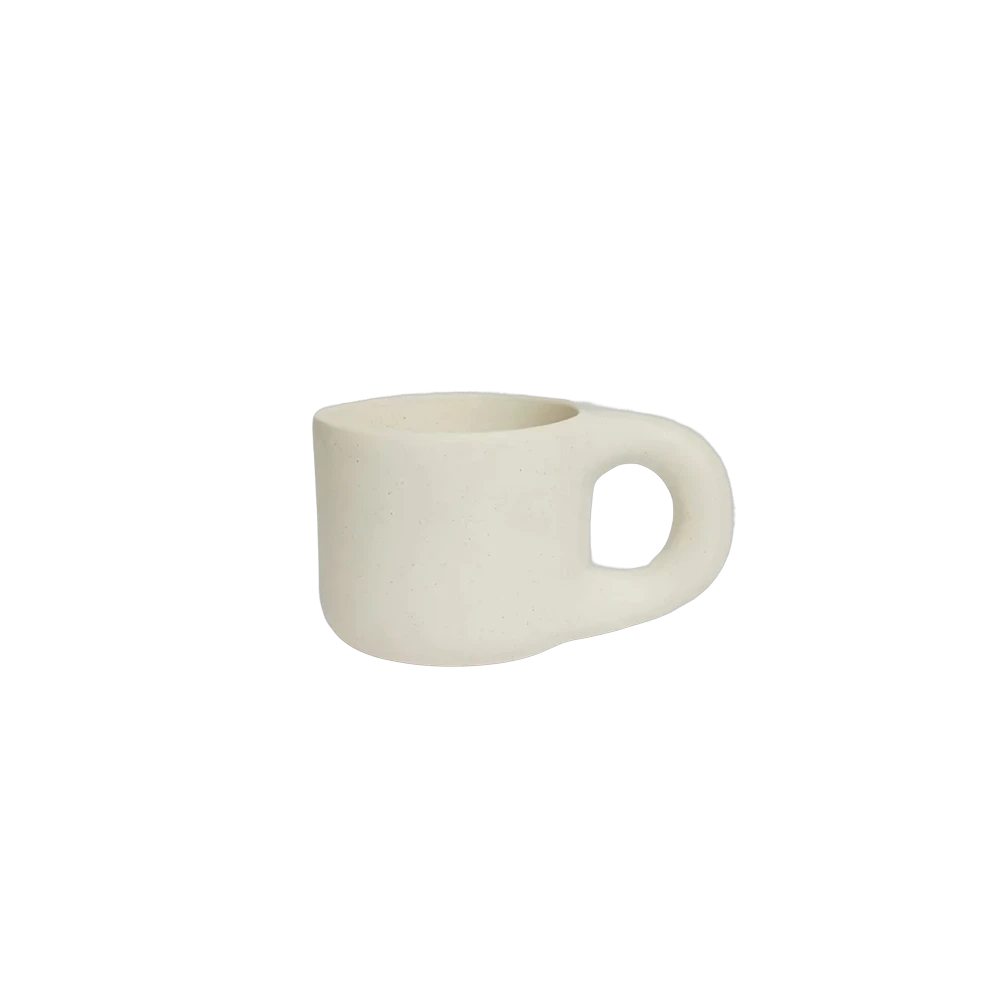
Toogood Dough Mug
Named after bread dough. Soft, yielding, expanding form. Curves where other mugs corner. 2025 Designer of the Year.
Studio Arhoj Familia Ghost
A ghost stripped of threat. All rounded surfaces: bulbous head, soft shoulders. Googly eyes complete the warmth transformation.
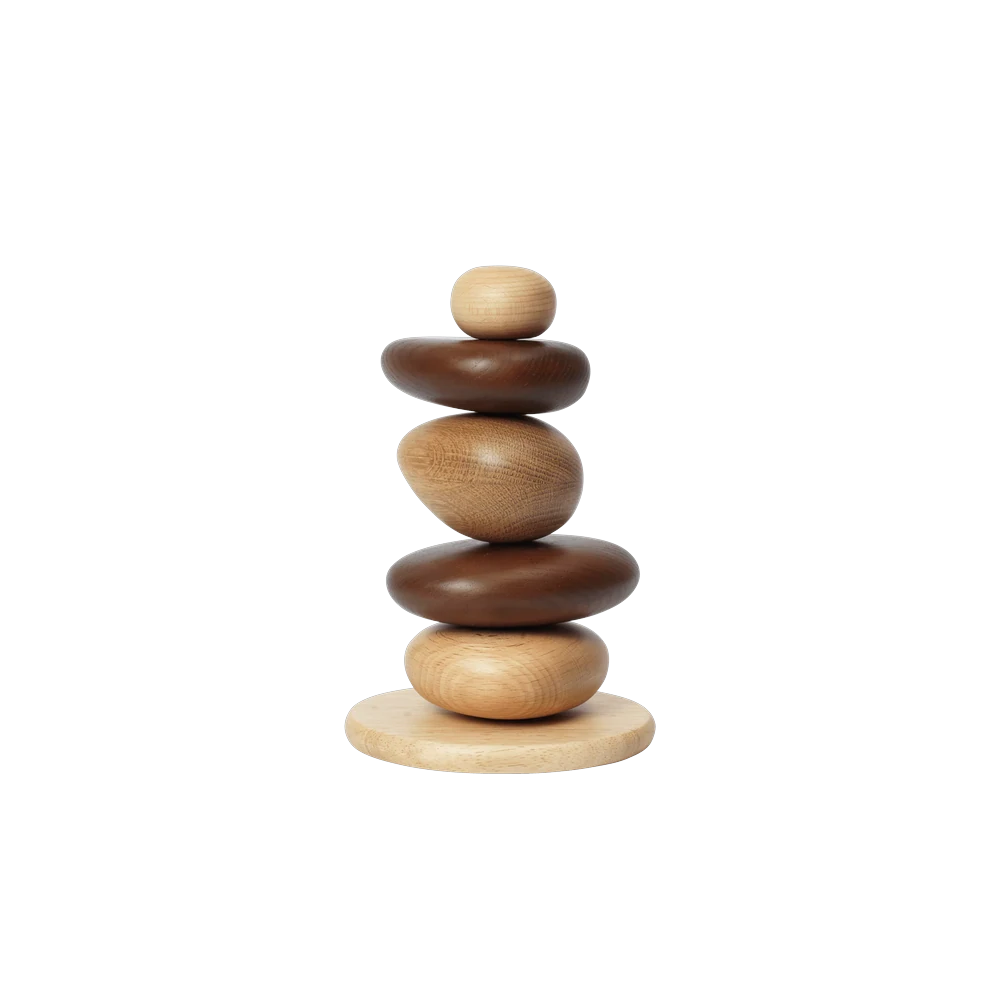
Ferm Living Pebble Blocks
Nature's proof of this principle. Water tumbles sharp rock into smooth pebble. No edges, no points, no threat. FSC-certified wood.
Generic Angular Frame
Sharp 90-degree corners, pointed edges. The brain's threat detection registers before conscious thought. Functional but no warmth advantage.
Your Brain Picks Curves in 84 Milliseconds
This visualization compares preference rates for curved versus sharp-angled objects from Bar & Neta's 2006 study in Psychological Science. When shown objects for just 84 milliseconds, participants preferred curved contours 67.2% of the time versus 50.6% for angular versions. The effect size (d = 0.94) is among the largest in visual preference research. The mechanism traces to evolutionary threat detection: sharp angles signal danger while curves signal warmth and safety.
Gifts That Win the Curve Advantage
- SIN Infinity Knot WOW 9.0 · $80
- Ilex Studio Avocado Vase WOW 9.0 · $60
- Toogood Dough Mug WOW 9.0 · $55
- Studio Arhoj Familia Ghost WOW 8.0 · $28
- Ferm Living Pebble Blocks WOW 9.0 · $115
SleekNova curates for the curve advantage. Every product above triggers warmth before the recipient forms a single conscious thought.
Five Gifts That Win in 84 Milliseconds
We selected these products specifically because their defining visual feature is curvature. Each one triggers the warmth response Bar and Neta documented.
The Infinite Loop
SIN Infinity Knot | $80 | WOW: 9.0
Virginia Sin’s ceramic sculpture is a continuous curve with no beginning and no end. Two loops intertwined, zero sharp angles anywhere. The infinity symbol rendered in speckled stoneware.
Your brain processes this form and finds nothing threatening, only the mathematical elegance of endless softness. Museum-collected ceramics from a Brooklyn studio, designed to sit on a desk and draw the eye without ever registering as danger.
The Fruit Form
Ilex Studio Avocado Vase | $60 | WOW: 9.0
Nature already solved this problem. Fruit evolved to attract, not repel. The avocado’s bulbous curve signals ripeness, nourishment, approach.
Ed Spurr’s emerald glass vase borrows that evolutionary shorthand. The spherical chamber, the organic swell of the form, the complete absence of edges. Your brain reads “safe” and “alive” before you consciously notice it’s a propagation vessel.
MoMA stocks it. Your recipient’s visual system will approve it in 84 milliseconds.
The Dough Rise
Toogood Dough Mug | $55 | WOW: 9.0
Faye Toogood’s Dough collection takes its name from bread dough; Design Milk traces it to the kneading that baking and pottery share. That soft, yielding, slowly expanding form is the opposite of threat.
The Dough Mug’s sculptural curves mimic something your hands have pressed into. Something warm. Something that feeds. The 2025 Designer of the Year, whose work two art museums, in Philadelphia and Denver, hold in permanent collections, softened the edges here; we read that as a shape for the warmth response.
Sharp handles are everywhere. This one curves where others corner.
The Friendly Threat
Studio Arhoj Familia Ghost | $28 | WOW: 8.0
Ghosts should be frightening. Anders Arhoj made one that isn’t by removing every sharp angle.
The Familia Ghost is all rounded surfaces: bulbous head, soft shoulders, curves where menace would normally live. The googly eyes (inspired by Shinto belief that objects have souls) complete the transformation.
Your brain receives the shape, searches for threat signals, finds none. A ghost that triggers warmth instead of fear. Copenhagen ceramics that rewire the expected response.
The Water-Smoothed Stone
Ferm Living Pebble Stacking Blocks | $115 | WOW: 9.0
Pebbles are nature’s demonstration of Bar and Neta’s principle. Sharp rock enters a stream. Water tumbles it for millennia. What emerges has no edges, no points, no threat.
Ferm Living’s stacking blocks replicate that ancient smoothing process in FSC-certified wood. Each piece palm-sized, rounded, impossible to hurt yourself on.
For children learning to build, for adults who want Scandinavian minimalism with zero visual aggression. The shape your brain trusts most: the one nature spent millions of years softening.
When Curves Don’t Win
Bar and Neta were careful to document the exception. Strong existing associations override contour effects. A curved snake is still disliked. A rectangular chocolate bar is still wanted. The brain weighs prior knowledge against visual form.
For gift-giving, this means curved contours give you an advantage with neutral objects, things the recipient hasn’t already formed strong opinions about. Novel designs. Unfamiliar brands. The discovery gifts that score highest on WOW. Coat hooks are such a category, and Muuto’s Dots in turned oak meet it with all-curve forms, five spheres for $167.
When someone encounters something new, contour becomes the first and sometimes only data point their visual system uses.
Lab Note
Bar and Neta’s study used images on screens, not physical objects. The 84-millisecond exposure is shorter than any real gift-unwrapping moment. And the sample (14 participants, 140+ item pairs per condition) prioritized item analysis over population generalization.
What the study proves is the existence of a preference, not its exact magnitude in every context. We cite it because the mechanism, threat detection via angular primitives, is grounded in evolutionary psychology and has been replicated across visual perception research.
The principle holds even if the precise percentages vary.
Explore More
- The WOW Factor: Why first impressions carry 35% of our score
- Ceramic Objects: Handmade forms where contour is the design
- The 50-Millisecond Gift: Related research on instant visual judgment
- Our Methodology: How research shapes every recommendation
Products in This Research
The gifts that embody this study's findings