Five Companies Worldwide Still Make This Samurai-Era Craft
Made the cut
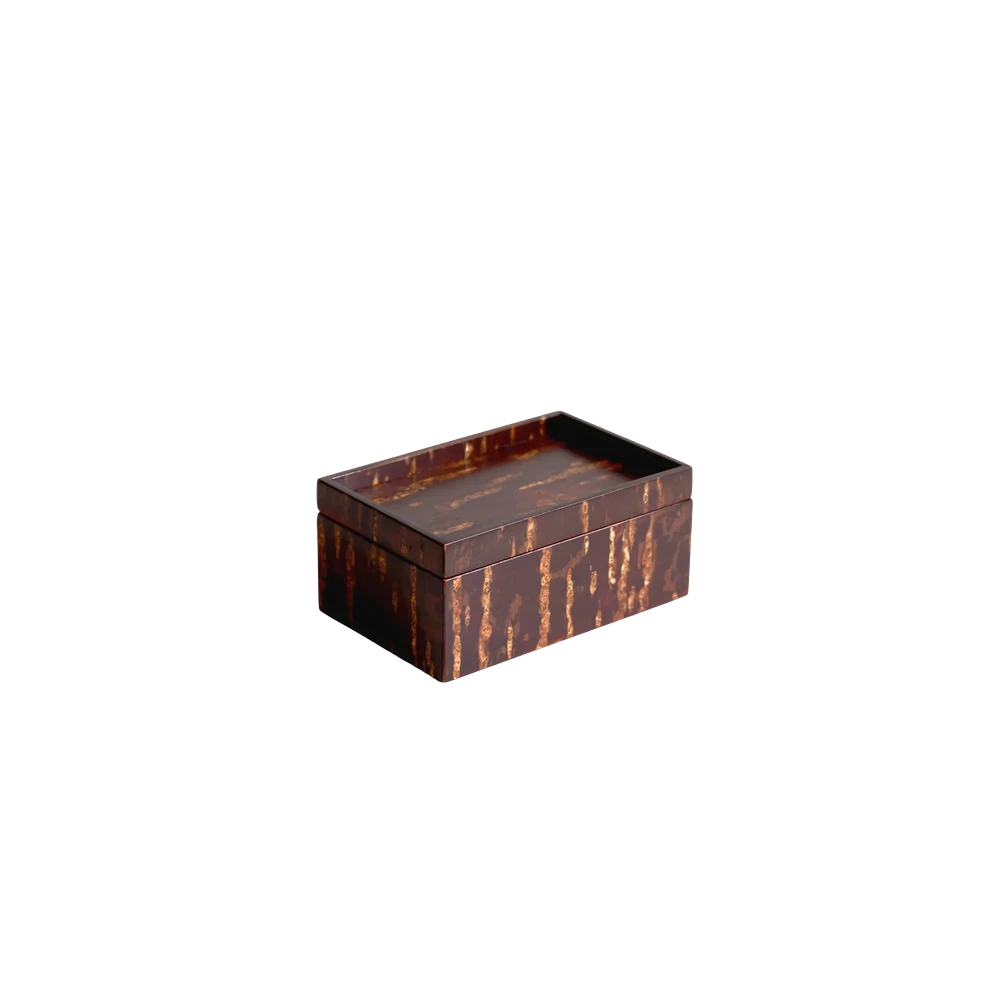
The problem with shopping for someone who has everything: if it exists and it’s good, they already own it. Their taste level plus their budget means the obvious options are already in their closet, their kitchen, their home office.
Finding something they haven’t seen requires finding something they couldn’t have found themselves.
We went looking in Kakunodate.
Where We Found It
Kakunodate is a former samurai castle town in Akita Prefecture, Only five companies worldwide still practice kabazaiku, the craft of working wild cherry bark into functional objects. All five are in Akita Prefecture.
The technique began in the 1780s when lower-ranking samurai needed peacetime income. The feudal lord encouraged production, and what started as a side occupation became a local industry that has continued for nearly 250 years.
Fujiki Denshiro Shoten has been making kabazaiku since 1851. That is 175 years and seven generations of the same family. In 1976, the Japanese government designated kabazaiku as a Traditional Craft, the first from Akita Prefecture to receive the recognition.
When we verified this maker’s credentials, we found a depth of institutional validation that rarely appears in our research: placement at design-forward retailers like Nalata Nalata and ABASK internationally.
Why This Scores 9 for WOW
Our WOW dimension measures discovery factor: how likely is the recipient to encounter something genuinely new? A score of 9 means the odds of prior exposure are exceptionally low. Three factors drive this rating for the Denshiro Cherry Bark Candy Box.
First, geographic monopoly. Within Japan, only Akita Prefecture has passed down the knowledge of using wild cherry bark in woodwork. The material comes from mountain cherry trees aged 70 to 80 years, harvested so only one third of the bark is taken and the tree continues growing. After stripping, the bark dries naturally for about two years before craftsmen can work it.
This supply chain exists nowhere else.
Second, production scarcity. Five workshops make kabazaiku. Denshiro has been a family-run business since 1851. The combination of limited makers and labor-intensive technique means production stays small.
A has-everything person may have shopped Tokyo, New York, London, Paris. They have not shopped Kakunodate.
Third, story depth. Samurai craftsmen. 175 years. A technique that predates photography. The discovery moment when someone asks “what is this material?” opens into the craft’s story.
That unfamiliarity is the feature, not a limitation.
The Gift Match
We matched this box to the has-everything persona specifically because geographic obscurity defeats self-purchasing. The recipient who can buy anything still cannot buy what they do not know exists.
At $150, it is a serious gift.
It sits on a desk, invites touch, and provides material for conversation when someone notices the unusual reddish-brown surface and asks about it.
What We Could Not Verify
No direct customer reviews exist for this specific product. Our trust score of 7.5 reflects this limitation.
We established confidence through the Brand Trust Protocol: 175-year heritage, seventh-generation family business, Traditional Craft designation, and presence at Nalata Nalata, ABASK, Kettl, TENZO and Japan Objects Store.
We cannot verify individual satisfaction for the candy box itself, only for the maker’s overall reputation.
The Verdict
Denshiro Cherry Bark Candy Box earns a final score of 8.3. The WOW dimension carries this rating, scoring 9 for genuine discovery potential.
For a has-everything recipient, the geographic monopoly of kabazaiku provides something they functionally could not have found on their own. The samurai-era origins give them a story to tell. A bark that grows more lustrous with handling gives them a reason to keep it visible rather than stored away.


