The Gift You Buy Might Threaten Your Identity
A vegetarian walks into a gift shop and buys a steakhouse gift card for her friend.
She knows her friend will love it. The restaurant is excellent. The gift makes perfect sense.
And yet something feels wrong. Not guilt exactly. Not regret. Something more personal.
That discomfort has a name. Marketing researchers Morgan Ward and Susan Broniarczyk identified it in 2011 and called it giver identity threat.
The Purchase That Threatened You
Morgan Ward and Susan Broniarczyk ran four experiments to understand what happens when givers buy products that contradict their own identities. Their findings, published in the Journal of Consumer Research, upended assumptions about who feels uncomfortable in gift exchanges.
The recipient? Fine. Happy, actually.
The giver? Measurably threatened.
In their first study, participants at the University of Texas purchased either a UT mug (identity-verifying) or a Texas A&M mug (identity-contrary) for a close friend. After the purchase, researchers measured where participants placed the gift on a table.
The results were physical. Participants pushed the rival school mug an average of 17.00 inches away from themselves. The verifying mug? Just 13.75 inches. The difference was statistically significant (F(1,49)=8.22, p<.0062).
They weren’t rejecting the gift. They were distancing themselves from what it said about them.
Why Close Friends Make It Worse
The research revealed a crucial boundary condition: this threat only appears when buying for close friends.
Distant acquaintances? No threat. The gift is just a gift.
Close friends? The identity stakes change completely.
Ward and Broniarczyk explain why: close others become “integral parts of the self.” When you buy something identity-contrary for someone who represents part of who you are, you’re not just giving them a gift. You’re endorsing that identity. And endorsement cuts both ways.
As they wrote: “Since the gift imposes an identity on both the giver and the receiver, the acceptance of a gift is acknowledgment by both people that the identity imposed is accepted.”
The second study confirmed this with pre and post identity measures. A three-way interaction (p<.019) showed that pre-gift identity predicted post-gift identity in every condition except one: close friend, identity-contrary gift. In that condition, the correlation collapsed to nearly zero (p=.79).
The gift purchase disrupted how givers saw themselves.
Who Actually Suffers When You Buy Against Your Identity?
Ward & Broniarczyk (2011) measured what happens when givers buy products that contradict who they are. The answer surprised everyone.
Identity-Contrary Gift
The Giver
Measurable identity threat. Physical distancing. Self-concept disruption. Compensatory behavior.
-
Physical Distance from Gift
17.00 inches away
vs 13.75 in for verifying gifts · F(1,49)=8.22, p<.006
-
Coded Threat Level
5.7 / 10
vs 3.5 for verifying gifts · F(1,57)=6.25, p<.0001
-
Identity Self-Correlation
Collapsed (p=.79)
Pre/post identity link destroyed · 3-way interaction p<.019
-
Compensation Behavior
3.7 chose identity pen
vs 2.2 for verifying · F(1,57)=13.77, p<.0005
Same Gift
The Recipient
Fine. Happy, actually. No measurable discomfort. The gift is just a gift.
-
Emotional Response
Happy
No negative affect measured
-
Identity Threat
None
Not measurably threatened by identity-contrary gift
-
Gift Appreciation
Normal positive response
Recipient enjoys the thoughtful gift
Boundary Condition
This gap only appears when buying for close friends. For distant acquaintances, no giver threat occurs. Close friends are extensions of self, so buying against your identity for them means endorsing an identity that contradicts who you are.
Products That Protect Giver Identity
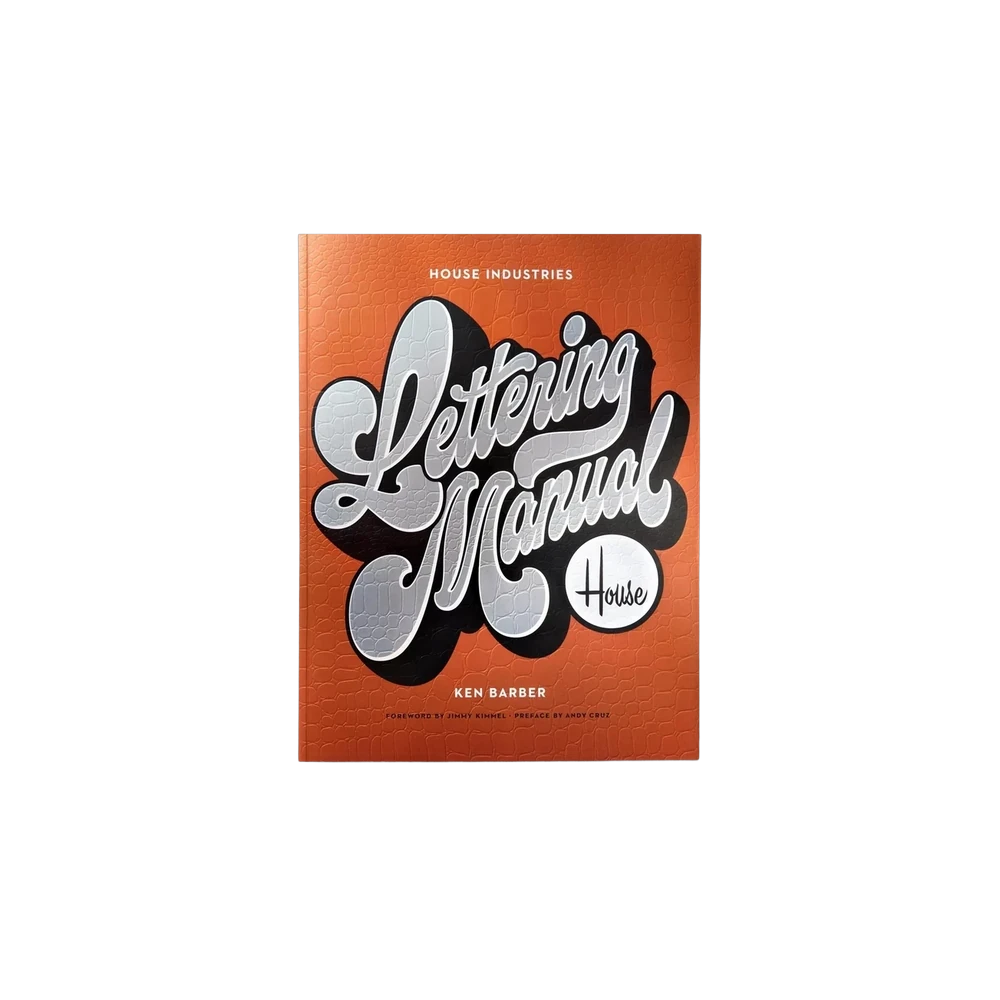
House Industries Lettering Manual
Expresses: Design & typography enthusiast
Smithsonian collection, Cooper Union credentials, 4.8★ across 744 reviews. A design-minded giver shares their identity, not compromises it.
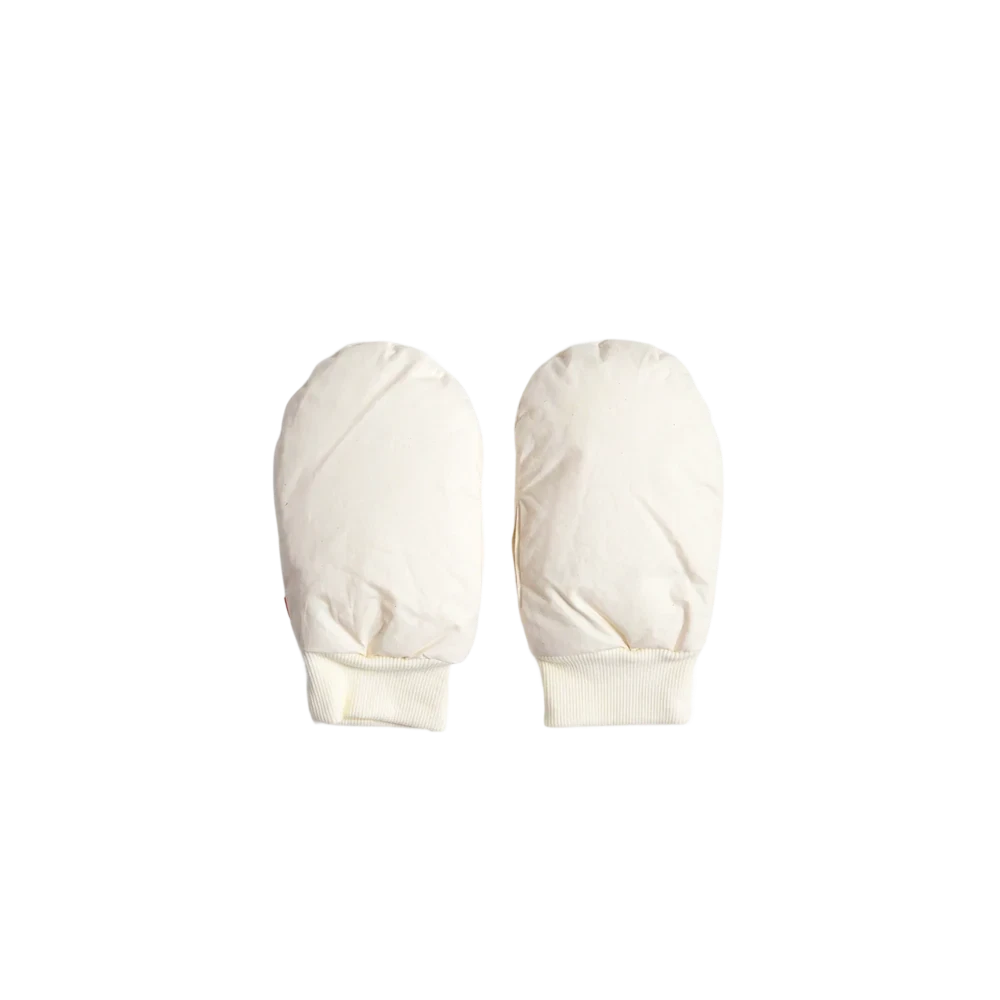
Iwata Down Hand Warmers
Expresses: Japanese craft & intentional rest
Kyoto bedding house since 1830. Good Design Award. Thumb-only slit designed for rest. Someone who values Japanese craft gives this knowing it reflects who they are.
Studebaker Workshop Cuff
Expresses: Craft heritage & maker provenance
Hand-forged brass by a museum-trained Pittsburgh metalsmith. 377 reviews, 94% of them verified. Stocked by Bespoke Post. A person who values how things are made gives this and reinforces that value.
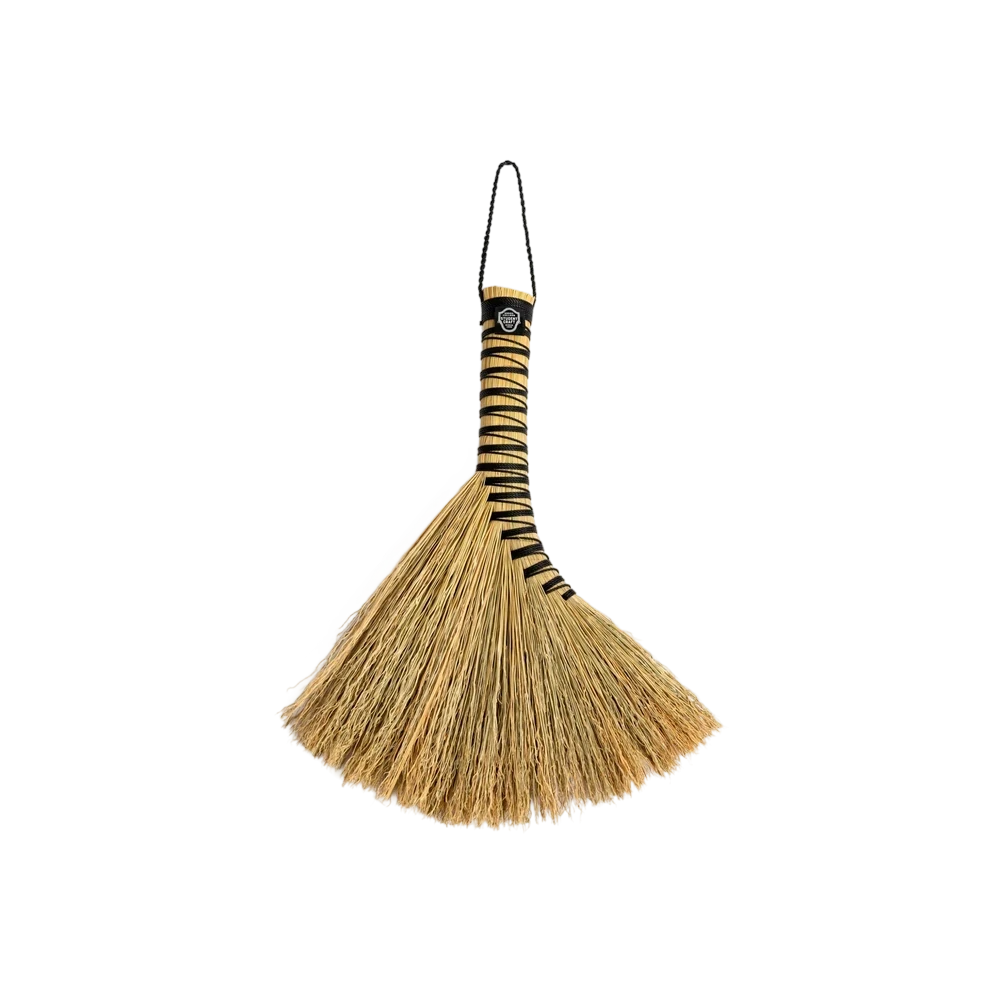
Berea College Classic Whisk
Expresses: Craft heritage & education
America's oldest continuously operating broomcraft program. Students earn tuition-free education. Smithsonian featured. Reinforces giver's craft-heritage values.
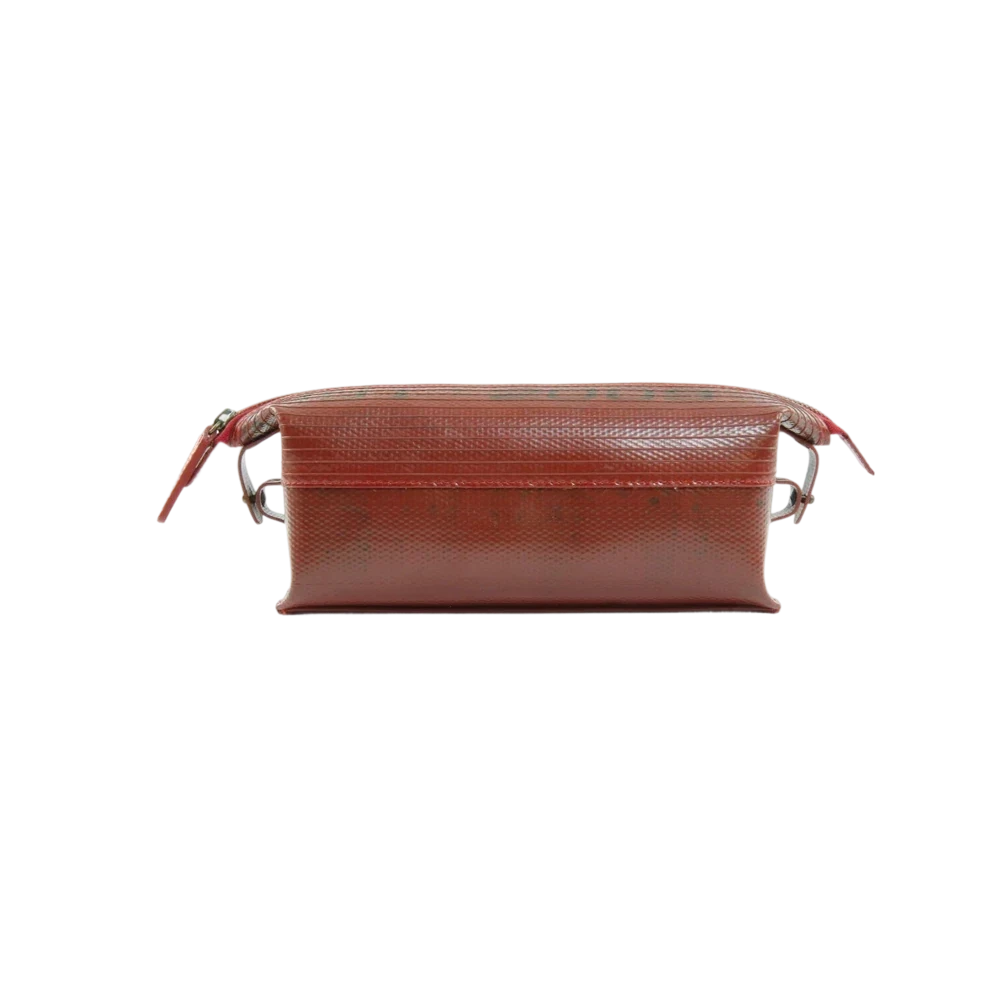
Elvis & Kresse Fire-Hose Washbag
Expresses: Sustainability & purpose-driven design
Decommissioned fire hose, founder holds CBE, 50% to firefighter charity, Walpole 2025 award. Sustainability-minded givers express their identity, not compromise it.
Steakhouse Gift Card
The vegetarian's dilemma
The vegetarian buying a steakhouse card. Recipient will love it. Giver feels identity threat. No verification to stand behind, just discomfort.
Rival School Merchandise
The study's signature finding
The UT student buying an A&M mug. Pushed it 17 inches away. The study's signature demonstration of giver identity threat.
Who Actually Suffers When You Buy Against Your Identity?
This gap visualization maps the disconnect Ward & Broniarczyk (2011) discovered between giver and recipient experiences with identity-contrary gifts. The giver side shows measurable threat: physical distancing, coded nonverbal stress, collapsed identity self-correlation, and compensatory behavior. The recipient side: happy, unthreatened. The gap only appears for close friends, because close others are extensions of self.
Products That Protect Giver Identity
- House Industries Lettering Manual TRUST 9.5 · $26
- Iwata Down Hand Warmers TRUST 8.0 · $90
- Studebaker Workshop Cuff TRUST 9.0 · $78
- Berea College Classic Whisk TRUST 7.0 · $45
- Elvis & Kresse Fire-Hose Washbag TRUST 7.0 · $93
SleekNova's TRUST verification gives givers permission to stand behind their choice. No identity threat, no pushing the gift away.
What Givers Do Next
The third study videotaped participants making choices. After selecting an identity-contrary gift for a close friend, they exhibited measurable nonverbal threat signals: facial tension, body positioning, unconscious distancing behaviors.
Trained coders rated their threat levels at 5.7 out of 10, compared to just 3.5 for verifying gifts (F(1,57)=6.25, p<.0001).
Then came the compensation behavior.
Immediately after the threat experience, participants were offered a choice between two pens for themselves: one that matched their identity but was less preferred, one that didn’t match but was more attractive. Threatened givers chose the identity-verifying pen at significantly higher rates (M=3.7 vs 2.2, F(1,57)=13.77, p<.0005).
They were repairing the damage. Reasserting who they were.
Beyond School Rivalries
A fourth study replicated the pattern with political identity. Democrats and Republicans chose magazine subscriptions (New York Times/Wall Street Journal versus Time) for friends. The same three-way interaction emerged (F(1,140)=33.64, p<.0128), proving the effect wasn’t about sports loyalty.
It was about identity itself.
The qualitative pilot study that launched this research collected stories from 30 participants. Ninety percent could recall buying an identity-contrary gift. Their words reveal the texture of the experience:
“I bought a girlfriend a Red Sox Cap when I’m an Oakland A’s fan (and actively dislike the Red Sox). I felt a little weird buying a Red Sox hat but it was nice to get something for my girlfriend.”
“I bought a friend a gift certificate to a steak house and I am a vegetarian. I didn’t feel good about it but I knew she would enjoy it.”
These weren’t major crises. But they were real discomfort, felt by people doing something thoughtful.
How SleekNova’s TRUST Pillar Addresses This
The TRUST dimension accounts for 15% of every SleekNova score. It measures whether we can verify a product is genuinely good through source diversity, source quality, claim verification, platform integrity, and temporal consistency.
This research explains why verification matters for givers, not just recipients.
When you choose a verified product, you’re not just ensuring quality. You’re giving yourself permission to express identity through the gift. High-trust products let you say “this is something I would choose” rather than “this is something they might like.” The difference protects you from the threat Ward and Broniarczyk documented.
Products with strong verification allow you to give confidently. To stand behind the choice. To feel no urge to push it 17 inches away.
Gifts That Let You Be Yourself
The House Industries Lettering Manual ($26) carries a TRUST score of 9.5. Smithsonian permanent collection. Cooper Union teaching credentials. 744 Amazon reviews at 4.8 stars. J.J. Abrams wrote that their work is “extraordinary.” When a design-minded person gives this to a friend interested in typography, they’re not compromising who they are. They’re sharing it.
The Studebaker Workshop Cuff ($78, TRUST 9.0) is hand-forged brass from a Pittsburgh metalsmith who spent years building mounts at the Philadelphia Museum of Art. 377 reviews, 94% from verified buyers, under a brand rated 4.88 across 936. Stocked by Bespoke Post. Featured in Tenue de Nimes and Pittsburgh Magazine. The identity claim is specific: craft over flash, provenance over marketing. A person who values how things are made gives this and reinforces that value.
The Berea College Classic Whisk ($45, TRUST 7.0) comes from America’s oldest continuously operating broomcraft program. Students earn tuition-free education making these by hand. Smithsonian featured. Lost Art Press calls them “the best brooms.” A person who values craft heritage gives this and reinforces that value.
The Elvis & Kresse Fire-Hose Washbag ($93, TRUST 7.0) uses decommissioned British fire hose that served 25 years fighting real fires. Founder holds a CBE. Won 2025 Walpole Sustainable Luxury Brand of the Year. 50% of profits go to firefighter charity. Sustainability-minded givers don’t compromise their identity with this gift. They express it.
The Iwata Down Hand Warmers ($90, TRUST 8.0) come from a Kyoto bedding house founded in 1830. Good Design Award. SOWAKA luxury ryokan partnership. The thumb-only slit is designed for rest, not productivity. Someone who values Japanese craft and intentional rest gives this knowing it reflects who they are.
The Real Protection
Ward and Broniarczyk measured what happens when givers buy against their identities. But their research implies something equally important: givers who choose identity-consistent, verified gifts avoid the threat entirely.
This isn’t about selfishness. Close friends are extensions of self precisely because the relationship matters. Giving them something you can stand behind honors that connection.
The products above score high on TRUST because their quality is verifiable. That verification does double duty: it reassures you about what you’re giving, and it frees you to give something that says who you are.
No pushing necessary.
Lab Note: This Deep Dive applies Ward & Broniarczyk’s identity threat findings to gift selection strategy. The original research focused on measuring the threat phenomenon, not gift recommendations. We extend their work by connecting verified products to giver confidence. Read the full study.
Explore More
- How We Measure TRUST: The verification dimension
- Our Full Methodology: How we score every product
- Every Gift Is an Identity Claim: The foundational theory Ward & Broniarczyk cite
- Why Close Friends Ignore Your Wishlist: More research from Ward & Broniarczyk on close-friend dynamics
Products in This Research
The gifts that embody this study's findings