Eighty-Six Years of Bookbinding. Zero Customer Reviews. The Ito Bindery Paradox.
Their own site runs a review box. One person has used it, to say how flat a different notebook of theirs lies open.
Did not pass
Haruo Ito opened a bookbindery in Tokyo’s Sumida district in 1938. His son Toshio took over. His grandson Masaki runs it now.
Four of the company’s ten employees are members of the Ito family. They make one product that matters here: a block of 350 sheets of precision-cut paper, mounted on a recycled cardboard base, bound with a traditional glue-brush method. It costs $25.
We scored it 7.35. Our threshold is 8.0.
The product that stopped us is not complicated. It has no mechanism, no technology, no moving parts. It is paper on cardboard.
What makes it unusual is the list of institutions that have chosen it. The Monocle Shop carries a custom edition. Grand Seiko distributed it at an exclusive event in 2019. The National Museum of Western Art in Tokyo sold a custom version during its Le Corbusier exhibition the same year. Nohga Hotel Ueno placed it in guest rooms. Lexus commissioned a version for its Crafted for Lexus program in 2013.
CW&T, the New York design studio, spent four years collaborating with Ito Bindery on a codex-bound sketchbook released in 2024.
The Memo Block itself launched in 2009. It came out of a Sumida city design collaboration project that paired local manufacturers with outside designers. Ito Bindery was matched with a firm called TENKEI Project. The result won a Good Design Award in 2010.
What We Found
We searched for customer reviews on the brand’s own Shopify store, on Rikumo (a Philadelphia-based Japanese lifestyle retailer that stocks it at $26.75), on Yoseka Stationery in Brooklyn ($25), on Amazon, on Reddit, and on YouTube.
We found zero reviews for the Memo Block on any platform.
The product is not listed on Amazon. No Reddit thread discusses it. No YouTube video reviews it.
The brand’s website does have a review section. It displays one review, from a verified buyer named William, for a different product (the Notebook Gray). He wrote: “Excellent binding. Love how easy it is to open flat and fold.”
That is the entire public customer record for Ito Bindery in English.
The Scores
GLOW scored 8. The Memo Block is, frankly, beautiful. The contrast between the precision-cut paper edge and the rough recycled cardboard base creates a profile that reads more like a small sculpture than an office supply.
Ito Bindery describes this as intentional: “the fresh-cut edge of paper and its smooth, refined surface are familiar pleasures” in bookbinding, and the Memo Block was designed to share that sensation with a wider audience.
WOW scored 9. An 86-year-old Tokyo family bindery making paper blocks chosen by Monocle, Grand Seiko, and a Le Corbusier exhibition is a genuine discovery, and Ito Bindery, by our reckoning, is a name few recipients will know. It sits quietly on the shelves of curated design retailers and in the guest rooms of thoughtful hotels.
MOMENT scored 7. The Memo Block is not a dramatic unwrapping. It is the kind of gift that reveals itself over weeks of use.
The company describes the Long format as “a favorite among designers” because it fits between a keyboard and monitor. The three sizes align into a B5 footprint when arranged together. These are functional pleasures, not theatrical ones.
TRUST scored 3.0. Our confidence score was 30 out of 100. Zero product reviews means zero platform integrity, zero review volume, zero visual proof, and zero sentiment data.
The 30 points came entirely from external validation: the Good Design Award (verified on the brand’s own site), the Monocle collaboration (verified on the Works page), and the institutional track record. We applied our Brand Trust Protocol, which recognizes that 86 years of heritage, premium retail presence, and editorial press coverage carry weight. But the protocol adds points to a foundation. When the foundation is zero reviews, the math stays low.
Why This Happened
Ito Bindery is a ten-person company in Sumida-ku, Tokyo. Their corporate website says they use “specialized handicraft techniques that cannot be replicated by machinery.” They switched to plastic-free packaging in 2019. They hold bookbinding workshops at their factory. They were featured in Mono Magazine in April 2026.
None of that generates customer reviews in English.
The Memo Block occupies a category of product that rarely accumulates reviews. It is a consumable sold at a low price point ($20 to $30 depending on size) through specialty retailers that do not typically run review platforms.
People buy it, use it, buy another one. The product does not inspire the kind of post-purchase evaluation that a $150 pen or a $300 leather bag does. It simply works.
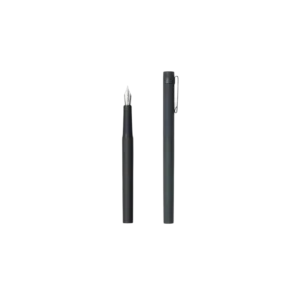
We see this pattern with other products from Tokyo’s artisan districts. The Kakimori Aluminium Fountain Pen, made in the nearby Kuramae neighborhood by another third-generation Tokyo stationer, passed our evaluation with six reviews and strong editorial backing from The Pen Addict.
Six reviews. Not sixty. The difference between passing and failing here was not volume. It was that six people wrote something down.
What Would Change
A small number of verified reviews on any retail platform would shift the confidence score.
The institutional validation is already strong. What our system lacks is any evidence that individual buyers have used this product and formed an opinion about it.
The heritage, the design press, the collaborations with Monocle and Grand Seiko and Lexus all suggest the product delivers on its promise. Our scoring system requires proof that it has.