We Traced This Towel’s Charcoal to a Craftsman Named Chōzaemon
Made the cut
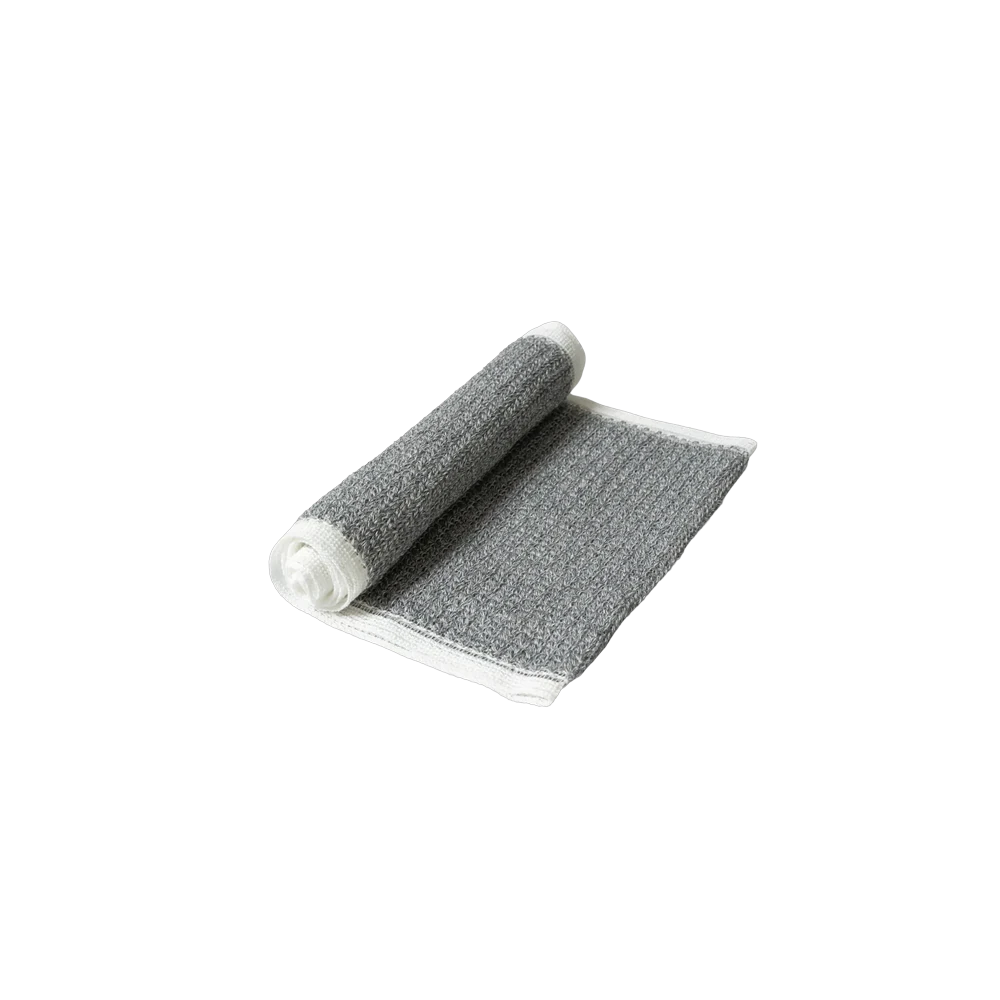
The charcoal in this towel traces to a specific person: Bichū-ya Chōzaemon, a craftsman who began producing binchotan in Tanabe, Wakayama during the Genroku era of 1688 to 1704.
We verified this through Wikipedia’s documentation of the process. That traceable lineage is why we scored this towel 9 out of 10 for discovery.
What We Verified About the Heritage
Binchotan charcoal dates back to the Edo period, when Chōzaemon figured out how to burn ubame oak at approximately 1,000 degrees Celsius. The technique remains largely unchanged.
According to Rikumo, Japan produces 1,800 tons of charcoal per year, and binchotan accounts for only a small portion of that amount. Only 3% of Japan’s charcoal comes from Kishu, the region where this process originated.
The towel itself is woven in Imabari, which Rikumo describes as Japan’s singular mecca of towel production for over 120 years.
Two distinct textile traditions converge in a single 40-inch cloth: Kishu charcoal-making from the 1680s and Imabari cotton weaving from the 1890s.
Why This Earns a 9/10 WOW Score
The WOW dimension measures uniqueness and discovery factor. We suspect binchotan is unfamiliar to many American recipients, and fewer still could give its Genroku era origins or name the craftsman who invented the technique.
The heritage story creates genuine discovery for any recipient, which is precisely what this score dimension evaluates.
We looked for products where the origin story cannot be easily replicated or fabricated. When the charcoal in a body scrub towel traces to a named individual in a documented historical period, that specificity matters.
The Long-Term Validation
The Reduce Report used this towel for over a year and gave it a BUY rating. Their exact words: machine-washable and looks beautiful hanging in our shower.
Amazon reviewers average 4.4 stars across 83 reviews. One reviewer called it the only cleansing cloth they will ever have in their shower. Another mentioned keeping extras on hand for guests because, as they noted, they all love it and appreciate a gift that is useful.
Who This Discovery Is For
The heritage story provides a specific gift-giving advantage: something to explain when you hand it over. Someone shopping for mom or a friend with good taste gains a narrative that transforms a bathroom product into a cultural object.
The dual Kishu and Imabari heritage gives the giver confidence, and the charcoal-grey aesthetic means it hangs well in any minimalist bathroom.
Into the Gloss featured the Morihata binchotan line and described it as design-store worthy. Goop, Anthropologie, and Tortoise General Store all carry it.
That retail presence validates what the heritage already suggests: this is not just a washcloth.
Our Conclusion
We scored this towel 9 out of 10 for WOW because the heritage is traceable, specific, and, we expect, news to whoever receives it. The charcoal process dates to 1688. The craftsman has a name. The weaving happens in a region with 120 years of towel-making expertise.
At $21, the discovery-per-dollar ratio is unusually high for bath products.