Paintings in Museums. Zero Ratings.
The same workshop weaves for the Imperial Household. What six months of bread does to the weave is recorded nowhere.
Did not pass
The name on the basket comes from an Edo-era painter.
Kocho Ueda served as official artist to the 11th Tokugawa feudal lord of Kishu. He studied Nihonga painting under Matsumura Goshun of the Shijō School. According to the company, his paintings now hang in Nishihongan-ji temple and the Osaka City Museum of Fine Arts.
In 1898, a bamboo business was founded in his honor. Today, five generations later, that business makes bread baskets.
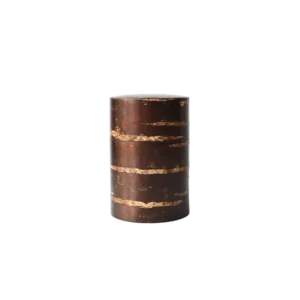
We found one for $165 at Nalata Nalata. Tiger bamboo from Kyoto. Natural striping that resembles a tiger’s coat. Each piece unique. Woven by hand in a workshop that also supplies the Imperial Household.
We searched for customer reviews.
Zero on the product page. Zero on the brand collection. Zero anywhere online. The basket has no star rating. No verified purchase feedback. No photo reviews of bread actually sitting in it.
What We Found Instead
Heath Ceramics stocks them. So does KonMari. VOLTA Vienna, ranked among Forbes’ top design stores in Vienna, carries the line. Design Milk visited Kyoto and toured the workshop with fifth-generation director Tatsuyuki Kosuga.
TripAdvisor gave their physical stores a Travelers’ Choice award.
None of this tells us what happens when you use the basket. Whether the weave loosens after six months. Whether the handle holds up. Whether bread looks as good in it as the product photos suggest.
The signals are all institutional. The customer voice is silent.
The Math
GLOW scored 8. The tiger bamboo pattern is genuinely striking, and the natural variation means each piece photographs differently.
WOW scored 9. A Kyoto atelier founded in 1898 and named after a feudal lord’s painter, stocked at a handful of design retailers and, as we read it, little known outside them. That’s the WOW factor we look for.
MOMENT scored 8. When a guest notices the unusual stripes and you can say “It’s from a fifth-generation Kyoto bamboo workshop,” the story tells itself.
TRUST scored 5. Zero reviews. No customer validation. Brand Trust Protocol applied based on heritage and stockist quality, but the confidence came to 54 out of 100.
Final score: 7.90. Our threshold is 8.0.
One Year Apart
There’s a century-old Japanese foundry on our site that makes brass bottle openers. FUTAGAMI. Founded in 1897. Same Brand Trust Protocol. Same zero product reviews when we first found them.
Different outcome: they passed at 8.4.
The difference isn’t craft or heritage. Both have that. The difference is in the details of scoring. FUTAGAMI had slightly higher trust signals from press coverage with specific product mentions. Kohchosai Kosuga’s coverage focuses on the brand story, not on specific products.
Two workshops, one year apart in founding, both excellent, both trusted by the same retailers. One made it. One didn’t.
That’s what a threshold does.
What Would Change This
Five reviews. That’s probably all it would take.
Five customers writing “I’ve used this basket for a year and the weave still holds” would shift the score. Five photo reviews of actual dinner parties with actual bread. The institutional validation is there. The customer voice isn’t.
If you want a century of Japanese craft we could verify, the FUTAGAMI Eclipse Bottle Opener comes from the same era and passed where this one couldn’t.
We wanted to recommend the Kohchosai Kosuga Toradake Bread Basket. The heritage is real. The stockists are impeccable. The tiger bamboo is beautiful.
The math said no.