Face Cleansing Went Electric. Kumano Had Already Solved It.
Made the cut
Search “best face cleansing brush” and every result ranks the same devices: Foreo Luna, PMD Clean, COSLUS sonic scrubbers, silicone vibrating pads. The category consolidated around electric.
We scored a face brush that went the opposite direction.
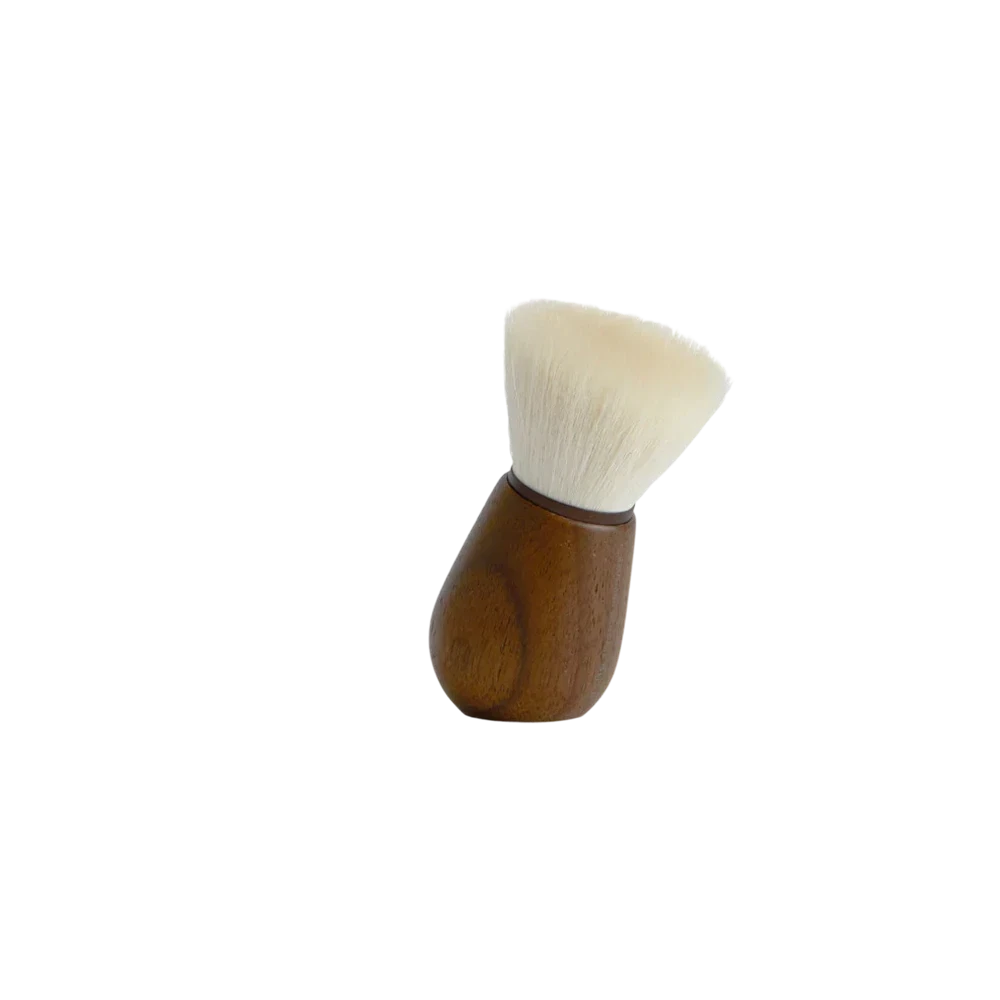
The SHAQUDA Suve Face Cleansing Brush ($78) uses goat hair bristles assembled by artisans in Kumano, Japan, a mountain town that has produced 80% of all Japanese brushes for 180 years. Our WOW score: 9 out of 10.
Why WOW Hit 9
Our WOW dimension measures uniqueness and discovery factor. A 9 requires depth of story that most shoppers have never encountered. The SHAQUDA Suve meets that bar because of where it comes from and what disappeared from the market around it.
Kumano, Hiroshima Prefecture: 80 brush workshops, 180 years of continuous production, responsible for 80% of all domestically made Japanese brushes. The Japanese Ministry of Economy, Trade and Industry designated Kumano fude as a Traditional Craft.
Mizuho Brush Company was founded there in 1970 by Taiji Shakuda. SHAQUDA launched in 2015 as its design-forward brand, debuting at Isetan and Mitsukoshi Tokyo. By 2016, the SHAQUDA UBU collection had won a Red Dot Award for Product Design. Wallpaper* Magazine featured the brand.
Meanwhile, face cleansing went through its own cycle. Clarisonic pushed sonic speeds until the brand shut down in 2020. Foreo introduced silicone vibration and app connectivity. Generic konjac sponges filled the budget tier.
The entire category moved toward motors, batteries, and charging cables.
Nobody asked whether a craft tradition older than all of them had already solved the problem differently.
That gap is why WOW scored 9. Design insiders know Kumano fude through Wallpaper* and Red Dot Award coverage. Shoppers searching for face brushes, we suspect, rarely meet this craft category.
What We Verified
Every claim in our scoring traces to a source. Kumano’s 180-year brush tradition and 80% domestic production figure are verified through METI Traditional Craft designation, Kogei Japan documentation, and multiple editorial sources.
Mizuho Brush Company’s 1970 founding in Kumano, SHAQUDA’s 2015 launch at Isetan Tokyo, and the 2016 Red Dot Award for the UBU collection are confirmed through brand timelines and award records. The 2011 Good Design Award for Mizuho’s MB series predates the SHAQUDA brand itself, establishing the parent company’s credentials before the consumer line existed.
Wallpaper* described the brand as aspiring to create products that soothe the skin and enrich the mind. Nalata Nalata called the bristles “shockingly soft.”
Bijo Paris stocks the body brush range. Beautyhabit carries the cleansing brush set. These are not mass-market distribution channels. Each retailer applies its own curation filter before stocking a product.
The Scores, Dimension by Dimension
GLOW scored 8. The walnut wood handle with cloud-white goat hair bristles forms a minimal Japanese object that stands upright on a bathroom counter. It photographs well because the design is intentional, not decorative. The visual appeal earns its score through material honesty rather than packaging.
MOMENT scored 8. Goat hair bristles feel impossibly soft on first contact. That tactile surprise, expecting stiffness and finding the opposite, creates the unwrapping moment that separates a considered gift from a generic one.
The brush transforms a face wash into a daily ritual. Two deliberate minutes instead of thirty automatic seconds, repeated every morning. Bijo Paris customers describe the bristles as stimulating without being aggressive.
TRUST scored 7. This is our most cautious dimension. The brand carries a Red Dot Award (2016), Good Design Award (2011), Wallpaper* editorial coverage, and retail stocking at Nalata Nalata, Beautyhabit, and Bijo Paris. The institutional validation is strong.
What keeps Trust at 7 rather than 8: product-specific consumer reviews are thin. The Amazon listing has limited reviews. Bijo Paris reviews cover the body brush, not the face brush specifically. We scored brand-level trust, not product-level review volume. Our confidence sits at 70%.
Final score: 8.2 overall. The formula weights WOW at 35%, GLOW and MOMENT at 25% each, and TRUST at 15%.
Who We Matched This To
Our gift intelligence flagged the Suve for women who already have a skincare routine but use their hands or a cloth to wash their face. The brush fills a gap they did not know existed.
It pairs best with givers who want to introduce a craft discovery rather than suggest a beauty improvement. A child giving this to a mom for Mother’s Day mirrors the care that Kumano artisans put into selecting each goat hair bristle. A husband navigating Valentine’s Day finds safe ground here: the Suve reads as a Japanese design object, not a skincare critique.
A best friend who has shared every product recommendation for years gets to introduce a category neither of them knew about.
At $78, the brush costs less than many serums already in the cabinet and gets used twice daily. The goat hair softens with each use.
The word Bijo Paris customers settle on, across multiple reviews: gentle.
What the Competition Missed
We reviewed the top-ranking face cleansing brush content during our research. The pattern is consistent: every list evaluates electric silicone devices against each other. Foreo versus PMD versus COSLUS versus budget Amazon options. The criteria are battery life, vibration modes, waterproofing, app connectivity.
Not one article positions a manual artisan brush as the alternative.
Not one mentions Kumano.
The face cleansing conversation happens entirely within the electric category, as if no other approach exists.
The SHAQUDA Suve scored 8.2 on our methodology because it operates outside that conversation entirely. No motor. No charging cable. No app. Goat hair bristles on oiled walnut, assembled by Kumano artisans using technique unchanged since the Edo period.