The Smile-Seeking Giver: Why You Chase Reactions (And How to Stop Losing)
In six preregistered experiments, researchers Adelle Yang and Oleg Urminsky uncovered something uncomfortable: when you choose the flashier gift over the practical one, you’re not making a mistake. You’re making a choice.
And it’s a choice that prioritizes your emotional payoff over theirs.
They call it “smile-seeking,” the instinct to optimize for the gasp, the laugh, the visible delight at unwrapping. The instinct that makes you pick the smaller bouquet of roses in full bloom over the larger bouquet of buds that would last longer. The instinct that fills drawers with forgotten novelty items every February.
The instinct you can learn to satisfy without the trade-off.
What Yang & Urminsky Actually Discovered
Much of the gift advice we read assumes the problem is prediction. That givers don’t know what recipients want. Get better at reading people, the logic goes, and you’ll give better gifts.
The research says otherwise.
The problem isn’t knowledge. It’s motivation.
“We proposed that a ‘smile-seeking’ motive is a distinct cause for these mismatches in the context of gift giving.”
Across 2,000+ participants, givers consistently chose reaction-maximizing gifts over satisfaction-maximizing alternatives, even when they acknowledged the other option would provide more lasting value. This isn’t confusion. It’s preference.
Gift-giving is a social act. Social acts come with social rewards. The giver’s emotional payoff comes from witnessing the reaction, not from knowing the recipient will be satisfied three months later.
The Trigger That Changes Everything
Here’s where the research gets actionable. The smile-seeking bias isn’t constant. It has a switch.
“This reaction-maximizing preference was mitigated when givers anticipated not giving the gift in person.”
When givers expected to ship the gift or have someone else deliver it, their choices shifted. Without the prospect of witnessing the unwrapping, they naturally optimized for lasting value instead of immediate impact.
The mechanism is clear: smile-seeking requires you as the audience. Remove yourself from the unwrapping scene, even hypothetically, and your decision-making changes.
Ship a gift and you think about utility. Hand it over and you think about the moment.
When the Instinct Becomes a Trap
None of this would matter if reaction-maximizing and satisfaction-maximizing gifts were the same. Sometimes they are. A truly great gift delivers both.
But often they’re not.
“Results from six studies suggest that anticipated affective reactions powerfully shape gift givers’ choices and giving experiences, independently of (and even in spite of) anticipated recipient satisfaction.”
“Independently of and even in spite of.” Givers aren’t confused about which gift will provide more satisfaction. They’re choosing the reaction anyway.
The flashy gift that gets the biggest response at the party sits unused by February. The novelty item ends up in a drawer. The expensive-looking object turns out to be poorly made.
The trap isn’t wanting to see delight. The trap is settling for gifts where delight is all you get.
Satisfying the Instinct Intelligently
The point isn’t to suppress smile-seeking. That’s a losing battle against your own psychology. The point is to find gifts where the reaction is justified by what comes after. One record shows how far a single gift can answer that: the one recorded gift of a Lichtenberg block reports the recipient’s delight, then the science behind it, and nothing of the months after.
Some products deliver dramatic unwrapping moments and lasting satisfaction. The gasp leads to daily use. The surprise leads to lasting appreciation. The reaction is the beginning of an ongoing relationship with the object, not the whole story.
This is what we measure with MOMENT, which accounts for 25% of our scoring methodology. Not just “will they react?” but “will the reaction prove warranted six months later?”
The best gifts don’t sacrifice satisfaction for reaction. They’re gifts where the reaction is earned.
Two Dimensions, One Sweet Spot
Yang & Urminsky’s framework maps gifts across two axes: immediate reaction (how strongly the recipient responds at unwrapping) and long-term satisfaction (how much lasting value the gift provides).
The smile-seeking pull, as the study describes it, draws givers toward one quadrant: high reaction, lower satisfaction. That’s the smile-seeking trap in data form.
The products below occupy a different quadrant: high on both dimensions. Every one scores MOMENT 9.0, validated against the same psychological principle the research uncovered.
The Smile-Seeking Trap: Where the Pull Leads
This scatter plot maps gifts across two dimensions identified by Yang & Urminsky (2018): immediate reaction at unwrapping (vertical axis) versus long-term satisfaction (horizontal axis). In the study, givers leaned toward the gasp over lasting value, the upper-left of this chart. The sweet spot is upper-right: gifts that deliver both the delighted surprise and years of use. All featured products score MOMENT 9.0, validated against this psychological research.
Products in the Sweet Spot
- Lumio Book Lamp 8.6 · $250
- Ichendorf Milano Bird Pitcher 8.3 · $65
- John Derian Picture Book 8.6 · $80
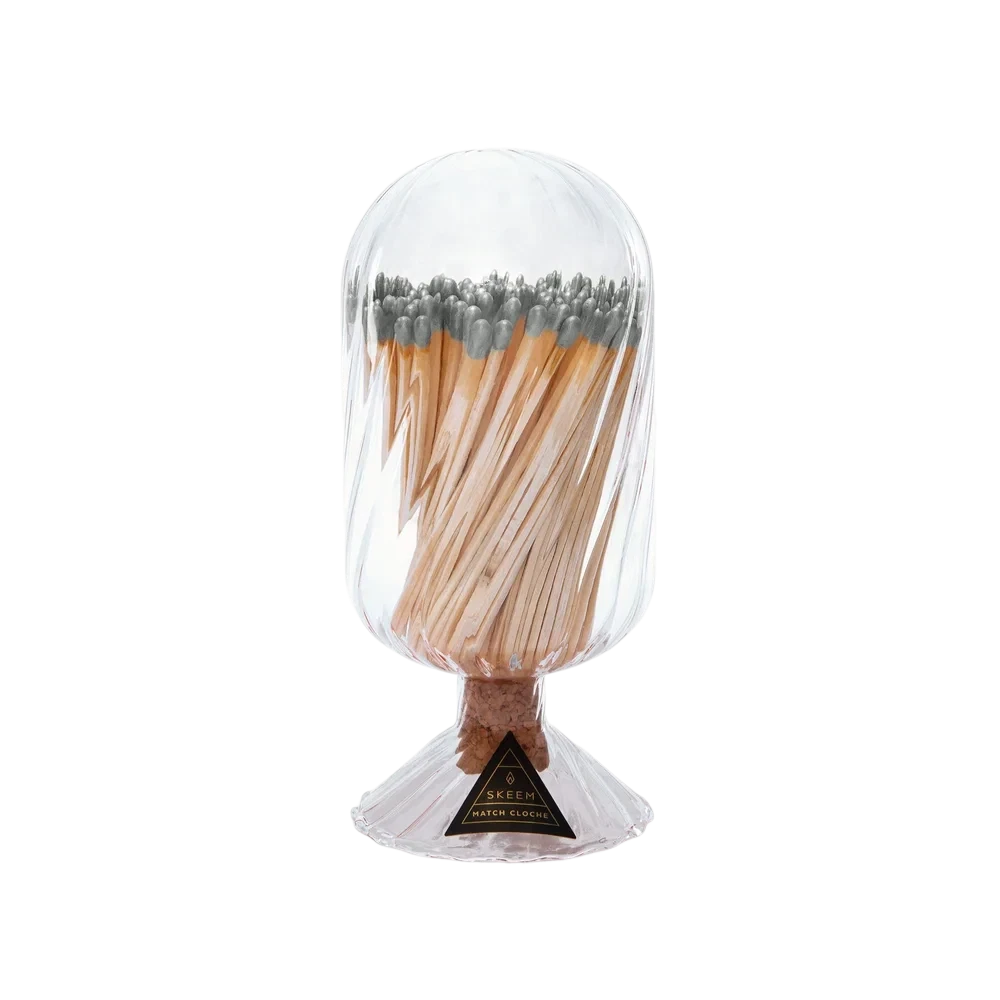
- Skeem Design Match Cloche 8.4 · $36
- Nousaku Tin Beer Cup 8.5 · $119
SleekNova curates for the upper-right quadrant: gifts that earn the reaction and keep delivering value.
| Product | Brand | Price | Score | MOMENT |
|---|---|---|---|---|
| Lumio Book Lamp | Lumio | $250 | 8.6 | 9.0 |
| Ichendorf Milano Bird Pitcher | Ichendorf Milano | $65 | 8.3 | 9.0 |
| John Derian Picture Book | John Derian | $80 | 8.6 | 9.0 |
| Skeem Design Match Cloche | Skeem Design | $36 | 8.4 | 9.0 |
| Nousaku Tin Beer Cup | Nousaku | $119 | 8.5 | 9.0 |
Five Gifts That Reward the Instinct
Lumio Book Lamp
$250 | Score: 8.6
It looks like a hardcover book. Walnut covers. Elegant. Then the recipient opens it, and it unfolds into a lamp.
The reveal is the product. The gasp is guaranteed.
But unlike most “surprise” gifts, this one earns its place. The Lumio becomes a daily-use object. Eight-hour wireless battery. Origami Tyvek pages that glow without heat. MoMA was its first retailer. Red Dot and Good Design awards followed.
The reviews tell the satisfaction story. One MoMA reviewer, a grandparent, has given it as a Christmas present twice: once to a grandson, who was enthralled, and later to a young man who called it “Elegant.” Not a novelty that got forgotten.
The reaction moment (book opens, light appears) is dramatic and shareable. But the giver’s reward doesn’t end at unwrapping. They watch the recipient use it for years.
Ichendorf Milano Animal Farm Bird Pitcher
$65 | Score: 8.3
Hand-made, flame-worked German-Italian glass with a white bird frozen mid-flight inside.
The moment someone sees it, they have to point it out. It’s designed for reaction. The kind of object that makes dinner guests ask, “Wait, is that a bird in there?”
You can already picture the scene.
But it’s also a functional pitcher. Tree-branch handle. The designer, Alessandra Baldereschi, studied industrial design at the Domus Academy and has exhibited at the Triennale di Milano. The V&A Museum Shop stocks the brand. The heritage is 100+ years of glassmaking, begun near Cologne and based in Milan since 1990.
Yang & Urminsky show givers want to see delight. This pitcher delivers a guaranteed reaction. Unlike a novelty item, it earns its place through beauty and daily use.
It doesn’t get hidden in a cabinet after the party.
John Derian Picture Book
$80 | Score: 8.6
New York Times Bestseller. Named one of the year’s best gift books by 10+ publications.
Nearly 300 full-bleed images from 18th- and 19th-century artwork. The oversized format creates an immediate tactile experience. When someone unwraps this, they don’t set it aside. They flip through it right there.
That’s the difference. A regular book gets a polite “thank you” and goes on a shelf. This one triggers instant engagement. Pages turn. Images get pointed at. The giver witnesses extended delight, not just a single reaction.
The Wall Street Journal called it “thick, satisfying… gloriously oversize.” John Derian products are sold by 600+ retailers worldwide, from Neiman Marcus to Liberty London.
This book turns unwrapping into a shared experience. The giver doesn’t just see a smile. They watch the recipient discover image after image, reacting repeatedly. The reward keeps compounding.
Skeem Design Match Cloche
$36 | Score: 8.4
Handblown glass. Cork stopper. Matches that flare like sparklers when struck.
Skeem’s founders discovered the vessel shape in Japan and reimagined it for home use. The cloche delivers the smile-seeking reward in layers. First, the handblown glass catches the light. Then the recipient pops the cork. Then they strike one.
The match flares bright before settling into flame.
Three reactions from a single gift, each one extending the giver’s reward beyond the initial unwrapping.
Founded in 2004. Woman-owned. Made in USA. Stocked at Bespoke Post. One reviewer captured the shift perfectly: “$36 for matches?! I have now owned this for a while, and $36 is a bargain for these, because they are flipping awesome.”
When the matches are gone, the cloche stays, and the glass itself becomes a display piece. Most match holders get hidden in a kitchen drawer. This one earns its spot on the coffee table.
The giver who watches that first sparkler-flare gets the reaction they wanted. The recipient who relights candles with it for months gets the satisfaction that justifies it.
Nousaku Tin Beer Cup
$119 | Score: 8.5
400 years of Japanese metalworking tradition from Takaoka. 100% pure tin.
Here’s what makes this exceptional for smile-seekers: it delivers two reaction moments. First, the initial “this is beautiful” when they see the craftsmanship. Then, the discovery: “Wait, the foam is different?”
The first pour settles into a visibly creamy foam. That sensory surprise extends the giver’s reward beyond the opening. You’re not just watching one reaction. You’re watching them test the difference with every sip.
Nousaku was founded in 1916. The MoMA Design Store selected its Bell in 2008 and its KAGO Square L in 2017. Tin has higher thermal conductivity than glass or porcelain. The “nashiji” finish creates creamier foam. It arrives in a paulownia wood presentation box.
A gift chosen for the smile can stop at the unwrapping. This one keeps revealing itself. The giver who stays for that first pour gets a second reward, and the recipient gets a conversation piece they’ll use for years.
The Real Choice
You’re wired to seek the smile.
That’s not a flaw to fix. It’s a feature to satisfy intelligently.
The research is clear: givers prioritize immediate reactions, especially when they’ll witness the unwrapping. Fighting that instinct is a losing battle. The winning strategy is finding gifts where the reaction leads to lasting value.
Every product on this page has a MOMENT score of 9.0. They’re designed for the scene. But they’re also built to earn their place long after the party ends.
Stop choosing between the gift that gets the reaction and the gift that gets used.
Start choosing the gift that does both.
Explore More High-MOMENT Gifts
Every product we curate is scored across four dimensions: WOW, GLOW, MOMENT, and TRUST. Learn how our methodology works.
Study: Yang, A.X. & Urminsky, O. (2018). “The Smile-Seeking Hypothesis: How Immediate Affective Reactions Motivate and Reward Gift Giving.” Psychological Science, 29(8), 1221-1233.
Explore More
- The MOMENT Pillar: How we score emotional impact and lasting use
- Our Full Methodology: The research behind every recommendation
- Why Random Tuesday Gifts Beat Birthday Presents: When timing expectations work against you
- The Three Stages Every Gift Must Survive: The ritual structure behind gift exchange
Products in This Research
The gifts that embody this study's findings