Fifty-Nine Years Unchanged. Seven Reviews.
It has been the same object since 1967 and seven reviews in fifty nine years left one complaint carrying all the weight.
Did not pass
In 1967, an architect better known for hotels and city halls sat down to redesign a cocktail shaker.
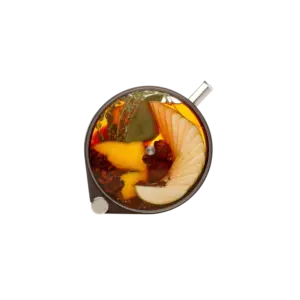
Arne Jacobsen stripped the form to pure geometry: a cylinder of satin-brushed stainless steel with no seams, no ornamentation, no concession to decorative trends. The result, part of Stelton’s Cylinda-line, won the ID-Prize that year from the Danish Society of Industrial Design, and the International Design Award the next from the American Institute of Interior Designers.
Design museums came to exhibit the line.
We scored it 7.98. The threshold is 8.0.
What the Numbers Say
The Stelton Arne Jacobsen Cocktail Shaker earned a 9 for Glow (the highest visual score in this evaluation batch), an 8 for Wow, and an 8 for Moment. Three scores that reflect what anyone who has held this object already knows: it is visually striking, it is a genuine discovery, and the weight of solid 18/8 stainless steel in your hand creates a real unwrapping moment.
Trust is where the math breaks down. Not because the product is untrustworthy, but because our system measures consumer evidence, and this product predates the system that measures it.
Stelton was founded in Denmark in 1960. The Cylinda-line launched in 1967. Amazon launched in 1994. The shaker had been in continuous production for 27 years before the first online review was technically possible.
Today, it has seven reviews on Amazon US (4.3 stars) and seven on Amazon UK (4.4 stars). Fourteen total customer reviews for a line by an architect whose work is in MoMA’s permanent collection.
The Institutional Evidence
What the shaker does have is institutional validation. MoMA’s permanent collection includes Jacobsen’s work. Design museums at Trapholt and beyond exhibit the Cylinda-line.
Hive Modern, Finnish Design Shop, Skandium, RoyalDesign, and at least six other premium design retailers stock it today. Fifty-nine years of continuous manufacturing without a single design change.
Our Confidence Score came to 62 out of 100, which translates to a Trust of 6.2. That qualifies as “good” by our labeling, but it is not enough to push the final number over the line.
At a Trust of 6.2, the final number fell 0.02 short of 8.0.
What Would Change This
More consumer reviews. That is essentially it. If the shaker had 50 reviews at its current rating on a verified platform, the Confidence Score would climb past 75, the Trust would land around 7.5, and the final score would clear 8.0 comfortably.
The product did not fail on quality, design, or heritage. It failed on volume.
One German-language review on Amazon mentions a leakage issue during use. With only seven reviews, a single negative report carries disproportionate weight. Fifty reviews would provide context. Seven reviews let one complaint define the conversation.
The Gap Between Institutions and Algorithms
We built a system that requires consumer evidence because consumer evidence is harder to fabricate than press quotes and award logos. A product with 2,400 verified reviews at 4.8 stars has been tested by 2,400 people who spent their own money and reported back. A product with 7 reviews and two design prizes has been tested by curators and design juries.
Both are meaningful. Our methodology privileges the first kind.
We think that is the right call for gift recommendations, where the person buying is not the person using, and “will this actually work in daily life?” matters more than “is this historically significant?” But it means a product like the Jacobsen shaker, which is almost certainly excellent, gets caught in the gap between institutional respect and consumer adoption.
The shaker costs $260 on Stelton’s US site. It has been the same object since 1967. It will probably be the same object in 2067.
Whether we recommend it or not does not change what it is.