The Science of Surprise Gifts: Why 60% of Gift Purchases Defy Wish Lists
Sixty percent.
That’s the share of all gift purchases that are surprise gifts, according to research published in the Journal of Retailing. Not items plucked from a registry. Not things the recipient hinted at.
Nearly two-thirds of the gift market runs on the giver’s independent discovery.
Which means the conventional wisdom about gift-giving has it backwards. We talk about knowing the recipient, understanding their tastes, listening for hints. But the data tells a different story: most of the time, givers are flying blind. They’re not executing a request. They’re making a bet.
And here’s where it gets strange. The researchers expected surprise gift purchases to involve more deliberation. More store visits. More information search. After all, you’re choosing without guidance. You’d think that would require extra homework.
The opposite happened.
The Giver Is Also Surprised
Joëlle Vanhamme and Cees de Bont analyzed gift-purchase data from a German consumer panel representing 20,000 households. Within that data, 1,144 gift purchases were examined, with 57% classified as surprise gifts.
The pattern that emerged was counterintuitive.
Surprise gift purchases, the researchers found, “seem to be some kind of impulse purchase.” Givers didn’t visit more stores. They visited fewer. They didn’t spend more time researching. They spent less. They didn’t have a clearer idea of what they wanted before entering the shop. They had a hazier one.
The giver, in other words, was also surprised.
Something caught their eye. Something sparked. They made a decision on the spot. The surprise they later gave was born from a moment of discovery they themselves experienced.
This finding reshapes how we understand gift selection. It’s not primarily a research problem. It’s a recognition problem. The right gift doesn’t emerge from exhaustive comparison. It announces itself.
The Surprise Gift Paradox: Less Research, Not More
What researchers expected vs. what they found about how surprise gifts are purchased
"Choosing without guidance requires extra homework"
- Store Visits
- Research Time
- Pre-Shopping Clarity
- Deliberation
"Surprise gifts resemble impulse purchases"
- Store Visits
- Research Time
- Pre-Shopping Clarity
- Deliberation
The giver was also surprised
Something caught their eye. Something sparked. The purchase decision accelerated. The surprise they later gave was born from a moment of discovery they themselves experienced.
Design Impact
Design is considered more important for surprise gifts than other gifts
Brand Name
Contrary to expectations, brand name is less important for surprise gifts
Products That Trigger the Impulse
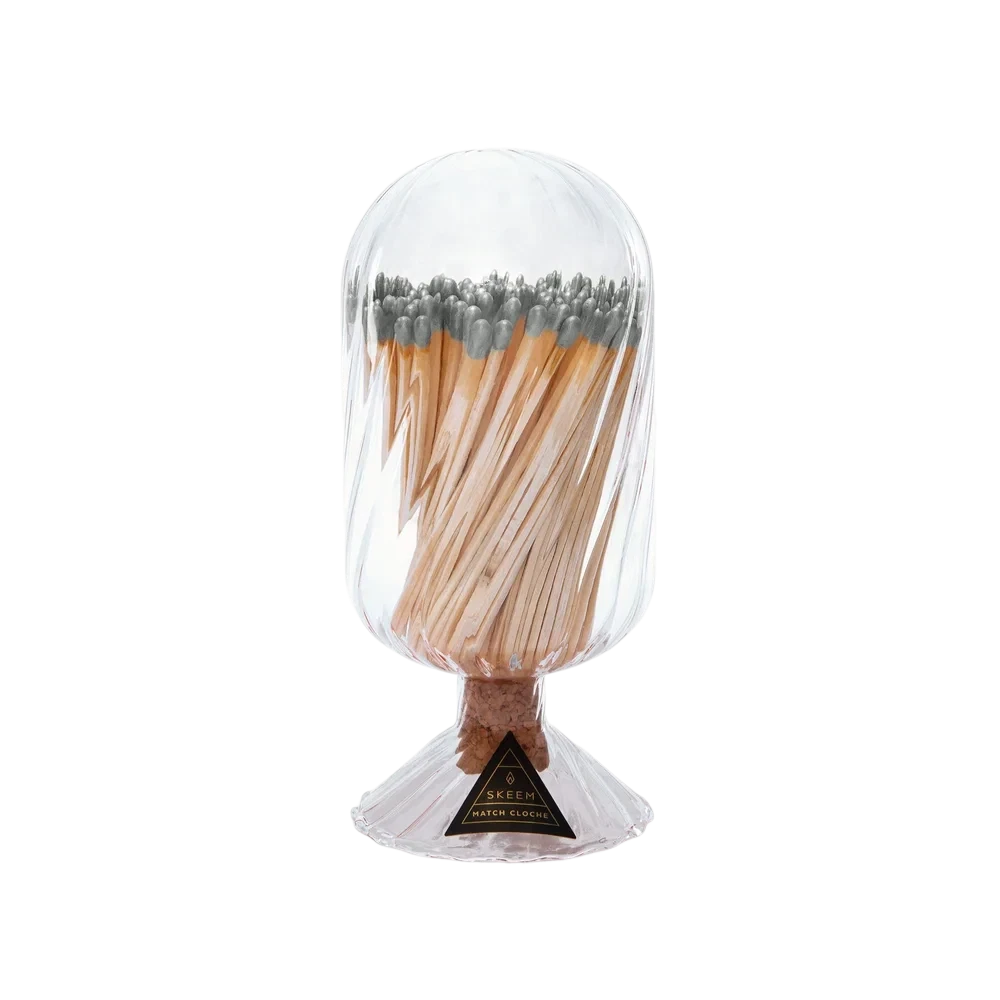
Skeem Match Cloche
$36
Studio Arhoj Ghost
$28
Lexon Mina M Lamp
$49.90
Gohar Bean Dish
$68
The Surprise Gift Paradox: Less Research, Not More
Vanhamme & de Bont (2008) analyzed 1,144 gift purchases and found that 57% were surprise gifts. The counterintuitive finding: surprise gifts involve less deliberation, not more. Givers visited fewer stores, spent less time researching, and had hazier initial ideas. Design impact triggered the purchase—brand familiarity did not. This paradox visualization contrasts what researchers expected (more homework) with what they found (impulse purchases driven by visual impact).
Products That Trigger the Impulse
- Skeem Match Cloche — WOW 8.0 · $36
- Studio Arhoj Familia Ghost — WOW 8.0 · $28
- Lexon Mina M LED Lamp — WOW 8.0 · $49.90
- Gohar World Bean Dish — WOW 9.0 · $68
SleekNova curates for the impulse moment—products with WOW scores that stop givers mid-scroll and convert browsers to buyers.
What Triggers the Impulse
If surprise gifts are bought on instinct, what activates that instinct?
The study tested multiple factors. Some performed as expected: money-back guarantees mattered more for surprise gifts than other gifts (risk reduction when you’re guessing). Women bought surprise gifts more often than men. Close relationships, those within the household, received more surprises.
But the most consequential finding was about design.
“Design is considered more important for the purchase of surprise gifts than the purchase of other gifts,” the researchers concluded. When givers saw something visually compelling, something with presence, the purchase momentum began.
Brand name, meanwhile, showed the opposite pattern. “Contrary to what was expected, the brand name is less important for surprise gifts than other gifts.” Familiarity didn’t drive the decision. Novelty did.
This is why discovery matters so much for gifting. When the giver encounters something they’ve never seen before, something that stops them mid-scroll or mid-aisle, the impulse fires. The question shifts from “Should I buy this?” to “Who should I give this to?”
Why This Validates WOW
At SleekNova, WOW carries 35% of our scoring weight, the highest of any pillar. We define it as the discovery factor: will the recipient ask “How did you find this?”
The Vanhamme and de Bont research explains why this weight is justified. If 60% of gifts are surprises, and if those surprises are triggered by design-driven impulse rather than brand familiarity, then the discovery factor isn’t just a nice quality.
It’s the engine of most gift purchases.
Products that score high on WOW create exactly the conditions the study describes. They stop the giver. They spark recognition. They convert a browser into a buyer, often before deliberation begins.
Our methodology measures what this research proves: the gift market runs on discovery.
When Surprise Doesn’t Work
The study also revealed boundaries.
Not all products are equally suited for surprise gifting. Irons, for example, were significantly less likely to be purchased as surprise gifts. Products associated with household chores, with utility over delight, fell outside the impulse zone.
The experiential motivation that drives surprise gifting doesn’t activate for a vacuum cleaner.
Relationship distance mattered too. Surprise gifts went disproportionately to recipients within the giver’s household, people whose tastes and lives the giver knew intimately. For more distant recipients, the risk of missing increased, and the impulse lost its power.
This suggests a principle: surprise gifts work best when the product offers personal pleasure (not household labor) and the giver has enough relationship context to trust their instinct.
Interestingly, research on gift registries shows that close friends are actually more likely to diverge from explicit requests — 61% of the time compared to 23% for distant friends — because the closeness itself creates confidence to surprise.
Objects That Trigger the Impulse
The research predicts a specific type of product: high design impact, immediately compelling, not dependent on brand recognition, not associated with chores. Here are four from our collection that match those criteria.
Skeem Match Cloche
$36 · View Product · WOW: 8.0
The founders discovered this vessel shape in Japan and reimagined it in Philadelphia. Handblown glass. Cork stopper. 120 tip-colored matches with a built-in striker on the glass.
The research connection is direct: the design triggers the impulse. A giver sees this, pauses, and the purchase decision accelerates. Brand familiarity is irrelevant; Skeem is unknown to most buyers. The visual impact does the work.
Studio Arhoj Familia Ghost
$28 · View Product · WOW: 8.0
A Copenhagen ceramicist trained in Tokyo. Shinto belief that objects have souls. Hand-thrown, triple-fired, glazed in gradients that pool uniquely on every piece.
The googly eyes are deliberate: they create an instant “what IS this?” reaction.
At $28, the risk is minimal. The impulse fires, the price doesn’t resist, and the gift happens. This is how the study’s pattern plays out in a real purchase.
Lexon Mina M LED Lamp
$49.90 · View Product · WOW: 8.0
Red Dot Award winner. MoMA Design Store stocked. Most people have never seen it. The spherical form, the 9 LED colors, the satisfying weight: the lamp announces itself before you read a word about it.
This fits the research profile exactly. Design triggers the impulse. Brand (Lexon) is secondary to visual recognition. Discovery drives the decision.
Gohar World Bean Dish
$68 · View Product · WOW: 9.0
Hand-carved mother-of-pearl from Vietnamese artisans. Iridescent surface that shifts with light. From a brand that dresses tables for Prada and Hermes but remains unknown to mainstream shoppers.
The story comes after the impulse. The giver sees the pearl, feels the weight, notices the iridescence. The purchase happens. Only later do they learn about the Gohar sisters and their design credentials.
Lab Note: Scope and Limits
This research was conducted with small electrical appliances in a German consumer panel (2002-2003). The product categories studied were shavers, hairdryers, electric toothbrushes, irons, and vacuum cleaners. Extension to all gift categories requires caution.
The study measured giver behavior, not recipient reactions. What we can claim: design drives surprise gift purchases, brand matters less than expected, and the purchase process resembles impulse buying. What we cannot claim: the study extends to all cultures or all product types without modification.
Our methodology focuses on the WOW pillar implication: that discovery factor and visual impact predict purchase momentum. The full dynamics of gift-giving involve relationship context, cultural norms, and recipient psychology that this single study does not fully address.
Explore More
- The WOW Factor: How discovery carries 35% of our score
- Our Methodology: The four pillars explained
- Research Library: All studies behind our scoring
- Candles and Fragrance: More products that trigger the impulse
Products in This Research
The gifts that embody this study's findings